Dealing With Asian Bureaucracy: Immigration Offices, Banks, and Government Services
You need seven photocopies of your passport, three of your visa, a photo that's exactly 4x6cm, and the patience of someone who has nowhere else to be today.
The Photocopy Economy
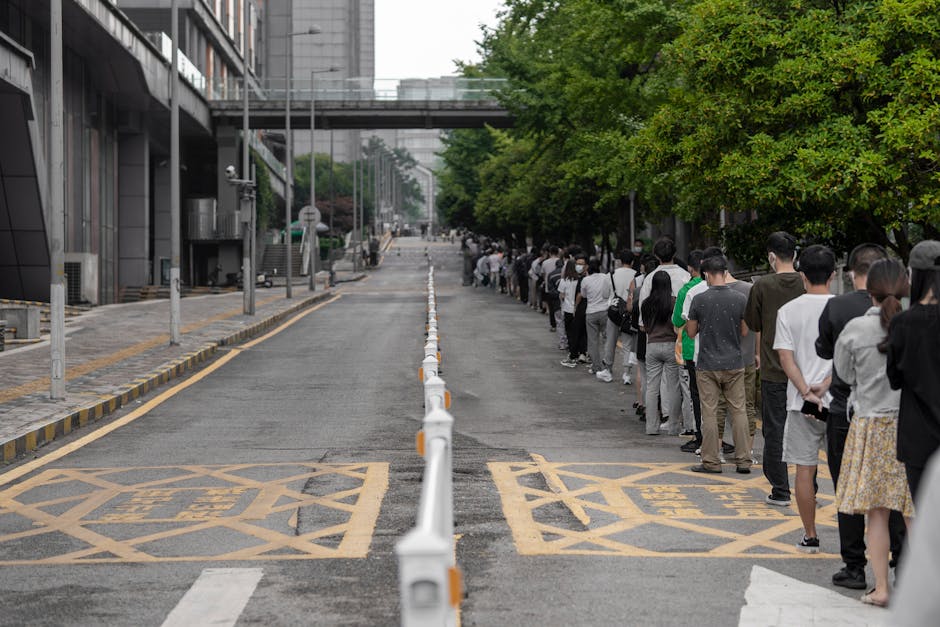
The first time I visited Thai immigration for a 90-day report, I arrived with my passport, a completed form, and what I thought was reasonable preparation. I was turned away because I didn't have a photocopy of my passport's information page, a photocopy of my current visa, a photocopy of my departure card (TM6), and a photocopy of my latest entry stamp. The photocopy shop across the street from the immigration office had a line of 20 people, all clutching passports and forms with the same bewildered expression. That photocopy shop, I later learned, does more business than most restaurants in the area. It exists because Thai immigration — and bureaucracies across Asia — run on paper. Not digital forms, not email attachments, not QR codes. Paper. Specifically, photocopies of paper, signed in blue ink, submitted in person, to a specific counter, during specific hours, after waiting in a specific line. Welcome to Asian bureaucracy.
This guide won't make the process enjoyable — nothing can do that. But it will prevent the specific mistakes that turn a half-day errand into a multi-day saga. After navigating immigration offices in Thailand, Japan, Korea, and Vietnam, here's what I've learned about the art of getting things done in systems that seem designed to test your patience.
Universal Preparation Rules
The Document Kit
Before visiting any government office in Asia, prepare a document folder containing: 10 photocopies of your passport information page (yes, ten — you'll use them), 5 photocopies of your current visa or residence permit, 5 photocopies of your most recent entry stamp or departure card, 5 passport-sized photos (4x6cm with white background — take them at a photo booth before you need them, not after), a blue pen (some offices reject black ink), and a folder to keep everything organized. This sounds excessive until the third time an office asks for a document you didn't think you'd need and you produce it from your folder like a minor bureaucratic deity.
Timing
Arrive before the office opens. Immigration offices in Bangkok (Chaeng Wattana), Tokyo (Shinagawa), Seoul (various), and HCMC (District 1) all see their longest lines between 10 AM and 2 PM. Arriving 30 minutes before opening gets you through in half the time. Monday mornings and the first business day after holidays are the worst; Tuesday through Thursday afternoons are generally the quietest. In Thailand, avoid going on the days immediately before a 90-day report deadline — the line will be triple the normal length.
Dress Code
Many Asian government offices have dress codes that aren't posted but are enforced at the door. Thai immigration won't process you in shorts above the knee, sleeveless shirts, or flip-flops. Japanese immigration is less strict but conservative dress signals respect and can subtly improve your interactions with officers. Korean immigration offices have similar expectations. Wear long pants, closed-toe shoes, and a shirt with sleeves. This is not about comfort; it's about removing one potential obstacle from an already obstacle-rich process.
Thailand: Chaeng Wattana Immigration
Bangkok's main immigration office at Government Complex Chaeng Wattana, Building B, is where most visa extensions, 90-day reports, and re-entry permits are processed. It's located in Laksi district, about 45 minutes from central Bangkok by taxi, and the building itself has the warm charm of a Department of Motor Vehicles the size of an aircraft hangar. Hours are 8:30 AM to 4:30 PM, Monday to Friday, but queue numbers are often exhausted by 2 PM for popular services.
The process: enter the building, go to the correct floor for your service (90-day reports on the 2nd floor, visa extensions on the 2nd floor in a different section), take a queue number, submit your documents at the designated counter, wait for your number to be called, then wait again while your application is processed. Total time: 1–4 hours for a 90-day report, 3–6 hours for a visa extension. Bring food, water, a phone charger, and a book. The free WiFi is unreliable.
Online 90-day reporting exists and works approximately 60% of the time. The system rejects applications for opaque reasons — wrong browser, server timeout, data mismatch with immigration records — but when it works, it saves you the entire trip. Try online first; if rejected, go in person. The immigration office in Chiang Mai (Promenada Mall) and Pattaya (Soi 5 Jomtien) are substantially less crowded than Chaeng Wattana if you can handle the trip.
Japan: Shinagawa Immigration
Tokyo Regional Immigration Services Bureau at Shinagawa is one of the busiest immigration offices in the world, processing residence card renewals, visa changes, and re-entry permits for Tokyo's foreign population. The office moved to a new building in 2023 with improved facilities, but the crowds remain formidable. Wait times of 2–4 hours are normal; peak season (April, when new academic and fiscal years begin) can push this to 6+ hours.
Japan's immigration process is notably more orderly than Southeast Asian equivalents. You take a number, wait in a clean, air-conditioned room, and are called to a specific counter. Forms are available in English and Japanese. Staff speak limited English but are patient and professional. The main frustration is the wait itself — bring entertainment and accept that this is a full morning or afternoon activity. Online appointment scheduling was introduced in 2024 and significantly reduces wait times for those who plan ahead. Book through the Immigration Services Agency website at least one week before your visit.
South Korea: Efficiency With Extra Steps
Korean immigration operates the Hi Korea online system (hikorea.go.kr) that handles appointment scheduling, form submission, and some services entirely online. The system is available in English and represents one of the most digitized immigration processes in Asia. Book an appointment online, fill out forms digitally, and show up at your designated time with minimal waiting. Without an appointment, walk-in processing is available but involves significantly longer waits.
The Alien Registration Card (ARC) process requires an in-person visit to your local immigration office within 90 days of arrival. Bring your passport, completed application form, one passport photo, proof of address, and your enrollment certificate or employment contract. Processing takes 2–3 weeks after submission, during which a temporary slip serves as your identification. The ARC is essential for opening bank accounts, signing phone contracts, and most other administrative tasks in Korea — prioritize getting it early.
The Language Barrier Strategy
Government offices in most Asian countries conduct business primarily in the local language. English-speaking staff exist but are not guaranteed, especially at provincial offices. Three strategies that help:
First, prepare documents in the local language. Have your forms pre-filled by a local friend, your employer's HR department, or a visa agent. This eliminates the back-and-forth of explaining what you need at the counter. Second, use translation apps proactively — type your question in English, show the translation to the officer. Google Translate and Papago (for Korean) handle bureaucratic vocabulary reasonably well. Third, hire an agent for complex processes. Visa agents in Thailand (฿1,000–3,000/$28–$84 per service), Japan (¥10,000–30,000/$67–$200), and Vietnam (VND200,000–500,000/$8–$20) handle the paperwork, queuing, and communication on your behalf. For anything more complex than a routine 90-day report, the agent's fee pays for itself in time and frustration savings.
The Mindset Shift
Western expats often approach Asian bureaucracy with frustration rooted in the expectation that government services should be efficient, digital, and fast. This expectation is neither universal nor, honestly, consistently met in Western countries either — anyone who's spent time at a US Social Security office or a British DVLA will recognize the familiar despair of government waiting rooms. The difference in Asia is that the process often involves more physical documents, more in-person visits, and communication barriers that amplify the frustration.
The expats who handle bureaucracy best treat it as a fixed cost of living abroad — the same way you'd budget time for grocery shopping or commuting. Schedule your immigration visit, bring everything you could possibly need, set aside the entire morning, and accept that this is what the day looks like. Fighting the system wastes energy that the system doesn't notice or care about. Flowing through it with preparation and patience gets you the same result with less cortisol damage. Pack snacks, charge your phone, download a good podcast, and remember that the person behind the counter processes hundreds of foreigners per day, speaks a language you can't, and deserves at least as much patience as you're asking for.