Best Cities in Asia for Remote Workers: An Honest Ranking
Every 'best cities for remote work' list puts Bali at number one. Here's why that ranking is lazy, and which cities actually deserve the top spots.

The Problem With Every Other List
Search "best cities in Asia for remote workers" and you'll get the same recycled ranking: Bali, Chiang Mai, Bangkok, maybe Ho Chi Minh City if the writer has actually been to Vietnam. These lists are built on vibes and Instagram aesthetics rather than the infrastructure that determines whether you can actually sustain a productive remote career. A beautiful beachside cafe in Canggu means nothing when the WiFi drops every 20 minutes during a client call. A cheap apartment in Chiang Mai loses its appeal when the air quality index hits 300+ for three months straight during burning season and you can't open your windows. After working remotely from eleven Asian cities over four years, I've developed a ranking based on what actually matters: reliable internet, affordable living, visa accessibility, social infrastructure, and the ability to maintain professional credibility while living 12 time zones from your clients.
1. Kuala Lumpur, Malaysia
KL is the most underrated remote work city in Asia, and I'm baffled that it doesn't top more lists. The internet infrastructure is excellent — fiber connections of 300–500 Mbps are standard in most condos, and 5G coverage blankets the city center. Coworking spaces like Common Ground, Colony, and WeWork offer day passes for RM40–80 ($8.50–$17) and monthly hot desks for RM400–800 ($85–$170). A modern one-bedroom condo near KLCC or Bangsar with a pool and gym runs RM2,000–3,500 ($425–$745) per month. Food is extraordinary and cheap — a meal at a mamak restaurant (the backbone of Malaysian dining) costs RM8–15 ($1.70–$3.20), and the culinary diversity spanning Malay, Chinese, Indian, and fusion cuisines means you never get bored.
The visa situation is manageable. Most Western passport holders get 90 days visa-free, which is generous for testing the city. The DE Rantau digital nomad pass offers a 12-month stay for those earning $24,000+ annually. English is widely spoken — Malaysia's colonial legacy means that business, government services, and daily interactions can all be conducted in English without friction. The time zone (GMT+8) overlaps with both Asian business hours and the tail end of the European workday, making it viable for clients across two continents. The only significant downsides: KL's public transport is improving but still car-centric compared to Tokyo or Singapore, and the tropical humidity is relentless year-round.
2. Bangkok, Thailand
Bangkok earns its reputation through sheer abundance of options. The coworking scene is massive — Hubba, The Hive, TCDC, Launchpad, and dozens of smaller spaces cater to every work style and budget. Monthly coworking memberships range from ฿3,000–8,000 ($84–$224). Home internet through True, AIS, or 3BB delivers 200–500 Mbps fiber for ฿600–900 ($17–$25) per month. The Destination Thailand Visa (DTV) provides legal status for up to 360 days with modest income requirements.
Bangkok's cost of living is the key differentiator. A comfortable one-bedroom near the BTS in Ari, Thonglor, or On Nut costs ฿12,000–22,000 ($336–$616). Eating three meals a day from street vendors and local restaurants runs ฿200–400 ($5.60–$11.20). The city's healthcare infrastructure is world-class and affordable. Nightlife, cultural events, weekend trips to beaches and mountains — everything is accessible and reasonably priced. The downsides are real: traffic is genuinely terrible, air pollution spikes during the cool season (December–February), and the heat from March through May is oppressive. But for pure value — the amount of life you can live per dollar earned — Bangkok is hard to beat.
3. Seoul, South Korea
Seoul surprises remote workers who weren't expecting it to be viable. Internet speeds are the fastest in the world — gigabit connections are standard and cheap, at ₩20,000–35,000 ($15–$26) per month. Cafes with excellent WiFi are on literally every block, and Korean cafe culture means nobody blinks at someone working on a laptop for four hours over a single Americano. Coworking spaces like WeWork, FastFive, and SparkPlus are modern and well-equipped, with monthly desks starting at ₩200,000–400,000 ($148–$296).
Cost of living is moderate — higher than Bangkok or KL but lower than Tokyo or Singapore. A studio or one-room in Mapo, Seodaemun, or Gwanak costs ₩600,000–1,000,000 ($444–$740) per month on a wolse (monthly rent) basis. Korean food is outstanding and reasonably priced at restaurants, though grocery shopping is expensive compared to Southeast Asia. The visa situation is trickier — Korea doesn't have a formal digital nomad visa, so most remote workers operate on the 90-day visa-free entry and do periodic border runs to Japan. The Workation visa pilot program, if expanded, could change this. Seoul's biggest strength for remote workers is cultural richness combined with first-world infrastructure. Its biggest weakness: the language barrier is steep if you don't speak Korean, and winter is seriously cold.
4. Ho Chi Minh City, Vietnam
HCMC is Bangkok five years ago — rougher around the edges, cheaper, and buzzing with entrepreneurial energy. Internet has improved dramatically; fiber connections of 100–200 Mbps are now standard in newer apartment buildings, and 4G mobile data is fast and cheap at VND100,000–200,000 ($4–$8) per month for generous data plans. Coworking spaces like Dreamplex, CirCO, and Toong offer monthly desks for $80–$150. A modern one-bedroom apartment in District 1, 2, or 3 costs $400–$700 per month, and eating local food is absurdly affordable at VND30,000–60,000 ($1.20–$2.40) per meal.
The coffee culture is perfect for remote work — Vietnamese iced coffee is the world's best productivity drug, and cafes with WiFi and air conditioning are everywhere. The energy of the city is infectious; you'll feel more motivated here than in laid-back beach towns because everyone around you is hustling. Visa options include the 90-day e-visa (single entry, $25) and the business visa through a local sponsor. The government has discussed a digital nomad visa but hasn't implemented one as of early 2025. Challenges: the traffic is chaotic even by Asian standards, motorbike noise is constant, and air quality in District 1 can be poor during peak hours.
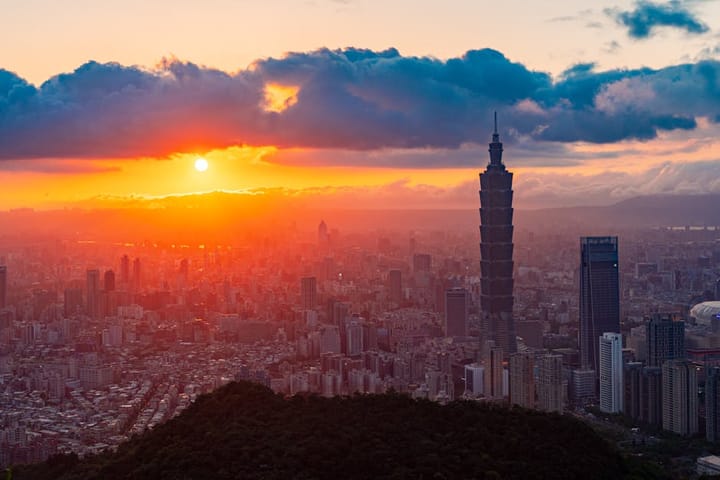
5. Taipei, Taiwan
Taipei combines first-world infrastructure with a cost of living that's 30–40% below Tokyo and Singapore. Internet is fast and reliable — 300 Mbps fiber runs NT$800–1,200 ($25–$37) per month. The cafe culture is excellent, with specialty coffee shops like Simple Kaffa, Fika Fika, and Louisa Coffee providing good WiFi and comfortable work environments. Coworking at spaces like CLBC, Changee, and Impact Hub costs NT$4,000–8,000 ($125–$250) monthly.
Housing in Taipei is affordable by Asian capital standards. A one-bedroom in Da'an, Xinyi, or Zhongshan runs NT$15,000–25,000 ($465–$775). The MRT system is clean, efficient, and cheap. National Health Insurance is available to residents after six months and covers 70% of medical costs. Taiwan's Gold Card visa program targets skilled professionals and offers a three-year residency with open work rights — one of the most generous programs in Asia. The food scene is spectacular, from night market stalls selling beef noodle soup for NT$120 ($3.70) to Michelin-starred restaurants. Typhoon season (July–October) and humid summers are the main weather drawbacks, but Taipei's overall livability-to-cost ratio is exceptional.
6-10: Quick Takes
6. Singapore: Perfect infrastructure, world-class safety, but expensive — budget $3,000–$4,500/month for a comfortable solo life. Best for remote workers with high incomes who prioritize efficiency and don't mind small living spaces. The ONE Pass and Tech.Pass visas target high earners specifically.
7. Chiang Mai, Thailand: Still the cheapest viable option at $800–$1,200/month total. Punna, CAMP, and Yellow coworking spaces are solid. Internet is good. The burning season (February–April) when farmers burn crop residue is a dealbreaker for many — AQI regularly exceeds 200, which is genuinely unhealthy. Best as a winter base (November–January) rather than year-round.
8. Da Nang, Vietnam: Beach city with improving infrastructure. Cheaper than HCMC with better air quality and beach access. Internet can be spotty in older buildings. Great for a few months, but the expat community is smaller and amenities are more limited than Saigon or Bangkok.
9. Penang, Malaysia: George Town's UNESCO heritage zone is gorgeous and cheap. Food rivals KL. Internet is good. The pace is slower, the community smaller, and the nightlife quieter — perfect if you want to focus on work without urban distractions. MM2H visa complications have reduced the long-term expat community.
10. Tokyo, Japan: Incredible city, but the cost and visa complexity put it lower on a practical ranking. Remote workers without a work visa operate in a gray area, and the cost of living requires $3,500–$5,000/month for comfort. Best for those with corporate backing or Japan-specific work reasons. Unmatched for culture, safety, and food quality.
The Ranking Nobody Wants to Hear
The honest answer to "what's the best city in Asia for remote work?" is "it depends on your income." Below $2,000/month, Chiang Mai and HCMC are your realistic options for a comfortable life. At $2,000–$3,500, Bangkok, KL, Taipei, and Da Nang open up. Above $3,500, you can live well anywhere on this list, including Seoul, Singapore, and Tokyo. The mistake most remote workers make is choosing based on aesthetics — Bali's rice terraces, Tokyo's neon streets — rather than the boring fundamentals that determine whether they'll actually be productive and happy six months in. Start with the internet speed, check the visa situation, calculate the real cost of your desired lifestyle, and then factor in the pretty pictures.