Culture Shock in South Korea: 15 Things Nobody Warns You About
South Korea looks familiar on the surface — Starbucks, iPhones, K-pop you already know. Then someone asks your age within 30 seconds of meeting you, and you realize you're somewhere very different.
The Familiar Disguise
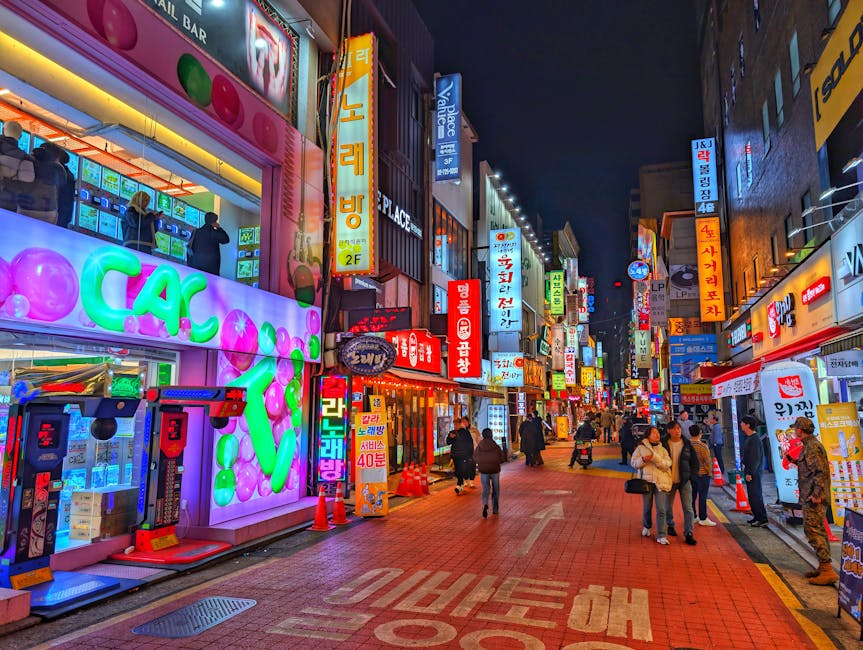
Seoul tricks you. The Starbucks on every corner, the Samsung Galaxy in every hand, the perfectly curated Instagram aesthetics of Gangnam — it all whispers "this is basically America with better internet." Then you sit down for your first work dinner and your boss fills your glass, and someone urgently whispers that you need to turn your head away while drinking because he's older than you. That's when it hits: you've moved to one of the most hierarchical, socially codified societies in the developed world, and the surface-level modernity is a beautiful disguise over traditions that run centuries deep.
I moved to Seoul to teach English, which is how roughly 60% of Western expats first arrive in Korea. Over three years, I accumulated culture shock moments the way other people collect refrigerator magnets — except these fundamentally changed how I understand social interaction, personal space, and what it means to be polite. Here are the ones that hit hardest.
1. Your Age Defines Everything
In Korea, one of the first questions anyone asks you is your age — or more specifically, your birth year. This isn't nosiness. It determines the entire framework of your social interaction: which speech level of Korean you use with each other, who pours drinks for whom, who walks through the door first, and subtle dynamics of respect that permeate every conversation. The Korean language has multiple levels of formality baked into its grammar, and using the wrong level is the social equivalent of showing up to a job interview in pajamas. When Koreans ask "What year were you born?" within minutes of meeting you, they're not being rude — they're trying to figure out how to talk to you correctly.
2. Drinking Culture Is Not Optional
Korean work culture includes a concept called hoesik (회식) — company dinners that are theoretically voluntary and practically mandatory. These involve soju, beer, or both mixed together (somaek), and they can stretch across multiple bars in a single night. Your boss will pour you drinks. You will pour drinks for others. Refusing to drink entirely is possible but socially costly — it marks you as an outsider in a culture where bonding over alcohol is the primary mechanism for building workplace trust. If you genuinely don't drink, say so early and firmly, and offer to be the designated driver or the person who orders food. Most Korean colleagues will respect this after initial surprise.
The soju itself is deceptively dangerous. It tastes like slightly sweet water, costs about ₩5,000 ($3.50) per bottle, and has an alcohol content of 16–20%. Three bottles into a hoesik dinner, people say things they wouldn't say sober, and that's actually the point — it's the socially sanctioned space for honest communication that Korea's rigid hierarchy normally prevents.
3. The Pushing Is Not Aggressive
Koreans, particularly older Koreans, will push past you in subway stations, on sidewalks, and in elevators without acknowledgment. This is not aggression. In a densely packed city of 10 million people, physical contact in public spaces is simply not the social event it is in Western countries. There is no malice in the ajumma (older woman) who elbows you aside to get onto the Line 2 train. She's been navigating crowds for decades, and the Western concept of maintaining a personal space bubble in public transit would strike her as hilariously impractical.
4. Your Phone Is Your Life — More Than You Think
Korea runs on KakaoTalk the way the rest of the world runs on air. Your landlord will contact you on Kakao. Your school's parent group is on Kakao. Restaurant reservations, doctor appointments, delivery tracking — all Kakao. The government sends emergency alerts through its own app. Banking happens through apps that sometimes only work on Korean phones. If your phone dies, you functionally cease to exist in Korean society until you charge it. Get a Korean phone number on day one — not day three, not "when you get around to it." Day one.
5. Appearances Matter More Than You're Comfortable With
Korea's beauty standards are intense and unapologetic. Plastic surgery is normalized to a degree that shocks most Westerners — double eyelid surgery is considered as routine as getting braces. Skincare is not vanity but basic hygiene; showing up to work with a visibly unattended complexion signals that you don't care about presenting yourself properly. Men wear BB cream and tinted sunscreen without any stigma. Women face enormous pressure to maintain specific beauty standards that include clear skin, a slim figure, and put-together outfits even for casual errands.
As a foreigner, you'll be somewhat exempt from these expectations, but you'll still feel the ambient pressure. Korean colleagues will comment on your weight changes, your skin condition, and your clothing choices with a directness that would constitute HR violations in most Western workplaces. "You look tired" means "you look bad." "Have you gained weight?" is a casual observation, not an insult. Adjusting to this takes time, and it's okay to find it uncomfortable even after you understand the cultural context.
6. Kimchi With Literally Everything
You will eat kimchi at breakfast, lunch, and dinner. It comes as a side dish (banchan) with every Korean meal automatically. There are over 200 varieties beyond the cabbage version most Westerners know — radish kimchi, cucumber kimchi, water kimchi, sesame leaf kimchi. Refusing kimchi at a Korean table is like refusing bread in France; technically possible but socially noted. If you have genuine digestive issues with fermented foods, explain this specifically, because "I don't like kimchi" is received with the same incomprehension as "I don't like music."
7. Shoes Off — Always, Everywhere
Removing shoes when entering any home is non-negotiable, but it extends further than most expats expect. Many restaurants require shoe removal. Temples, obviously. Some office spaces. Fitting rooms in clothing stores. The threshold between "shoes on" and "shoes off" is often marked by a slight elevation change in the floor — step up means shoes off. Invest in slip-on shoes you can remove quickly and socks you're not embarrassed by. Showing up in threadbare socks to a Korean home dinner is noticed.
8. The Delivery Economy Will Ruin You
You can get virtually anything delivered to your door in Seoul within 30 minutes, often for free. Coupang (Korea's Amazon equivalent) offers dawn delivery — order by midnight, it's at your door by 7 AM. Food delivery through apps like Baemin (배달의민족) covers every restaurant from fried chicken to fine dining. You can order a single cup of coffee delivered. This convenience is addictive and it will make every other country feel broken when you leave. The downside: it's almost too easy to never leave your apartment, and delivery isolation is a real issue among expats in Seoul.
9. Heated Floors Change Your Relationship With Winter
Korean apartments use ondol — radiant floor heating that turns your entire floor into a warm surface. In winter, when Seoul temperatures drop to -10°C (14°F), you'll find yourself lying on the floor like a cat on a radiator. It's the single best thing about Korean housing, and it makes Western-style forced air heating feel barbaric by comparison. The flip side: adjusting the temperature requires figuring out your apartment's boiler control panel, which is always in Korean and features cryptic buttons that apparently mean "furnace mode" and "away mode" but could also mean "launch sequence" for all you know.
10-15: Quick Hits
10. Couples culture is everywhere. Matching outfits, couple rings after two weeks of dating, designated couple seats in movie theaters. Being single past 30 invites constant questions and concern from Korean friends and colleagues who genuinely worry about you.
11. Nunchi (눈치) is a superpower you need to develop. It's the ability to read a room — gauging others' moods, understanding unspoken dynamics, knowing when to speak and when to stay quiet. Koreans consider it a fundamental social skill, and they'll notice if you lack it. Pay attention to what people aren't saying.
12. Apartment deposits are astronomical. A typical jeonse (long-term lease) requires a deposit of 60–80% of the property's value — we're talking ₩200,000,000–₩500,000,000 ($150,000–$370,000) for a modest apartment in Seoul. Wolse (monthly rent) is the alternative, with lower deposits of ₩5,000,000–₩20,000,000 ($3,700–$14,800) plus monthly payments. Either way, housing will be your biggest financial shock.
13. The "ppalli ppalli" (빨리빨리) culture. Fast, fast, fast. Elevators have door-close buttons that people press immediately. Restaurants serve food within minutes. Package delivery is same-day. Internet speed is the world's fastest. This urgency is exhilarating when you need something done and exhausting when you want to slow down.
14. Recycling is mandatory and complicated. Food waste goes in special bags you buy from convenience stores or district offices. Regular waste has its own bags. Recyclables are sorted into categories. Getting recycling wrong earns you passive-aggressive notes from neighbors and occasionally a visit from your building manager. Learn the system in your first week.
15. Leaving is harder than arriving. The initial culture shock fades after six months or so, replaced by a deep appreciation for the efficiency, the food, the safety, and the particular brand of warmth that Koreans show once they've accepted you into their circle. The reverse culture shock of returning to a country without heated floors, 24-hour delivery, and the world's best fried chicken is something nobody prepares you for.