The City That Has Everything Except Hype
After three years in Asia — one each in Bangkok, Tokyo, and Seoul — I moved to Taipei on a whim based on a friend's recommendation and a cheap flight. Within six months, I'd stopped looking for the next city. Taipei had quietly assembled everything I'd loved about each previous city while avoiding their most frustrating characteristics. The food culture rivals Tokyo's depth at a fraction of the cost. The public transit is Seoul-level efficient without the corporate pressure. The cost of living is closer to Bangkok than to any other Asian capital with comparable infrastructure. The healthcare system — Taiwan's National Health Insurance — is better than anything I'd experienced as an expat, anywhere. And the people are warm in a way that's genuine rather than performative, a quality I'd been told about but didn't fully believe until I experienced it.
Taipei doesn't dominate "best cities for expats" lists because Taiwan occupies a peculiar position in global awareness. It's not a backpacker destination like Thailand, not a corporate hub like Singapore, and not a cultural powerhouse like Japan in Western imaginations. This relative obscurity is simultaneously Taipei's greatest asset (fewer tourists, less inflation, less expat bubble) and its biggest recruitment challenge. Here's what you're missing.
The Food Alone Justifies the Move
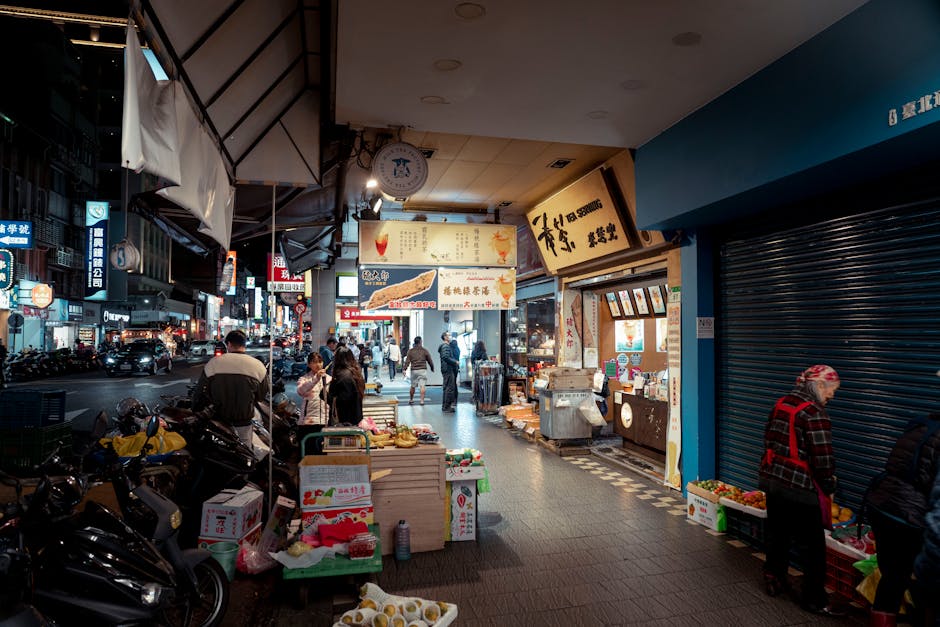
Taipei's night markets — Shilin, Raohe, Ningxia, Tonghua — are not tourist attractions. They're functioning dinner options for hundreds of thousands of Taipei residents who eat street food several nights a week. A full evening of eating at a night market costs NT$200–400 ($6.20–$12.40): stinky tofu (NT$50), oyster omelette (NT$70), pepper pork bun (NT$55), bubble tea (NT$50), and mango shaved ice (NT$80). The quality is extraordinary because competition is brutal — stalls that aren't excellent close within months, and the survivors have often been perfecting a single dish for decades.
Beyond night markets, Taipei has over 30 Michelin-starred restaurants and hundreds of Bib Gourmand and recommended establishments. Din Tai Fung, the dumpling empire, originated here, and the original Xinyi Road location still serves what may be the world's best xiao long bao (soup dumplings) for NT$220 ($6.80) per basket. Japanese food in Taipei is excellent because of the historical Taiwan-Japan connection (Taiwan was a Japanese colony 1895–1945, and the cultural influence persists in cuisine and aesthetics). Korean, Thai, Indian, and Western restaurants are abundant and competitively priced because Taipei's food-obsessed population demands quality regardless of cuisine origin.
Practical Living
Rent in Taipei is the most pleasant surprise for expats coming from other Asian capitals. A modern one-bedroom apartment in Da'an (the most desirable central district) costs NT$18,000–28,000 ($560–$870). In Zhongshan or Songshan, NT$14,000–22,000 ($435–$683). In Xinbei (New Taipei City, the surrounding metropolitan area), NT$10,000–16,000 ($311–$497). These prices are 30–50% below equivalent housing in Tokyo, Seoul, or Singapore. The apartments are typically smaller than Bangkok equivalents but newer and better maintained.
The MRT is clean, efficient, air-conditioned, and cheap — NT$20–65 ($0.62–$2.02) per ride. The YouBike shared bicycle system (NT$5 per 30 minutes) covers the entire city with stations every few blocks. Between the MRT, YouBike, and occasional taxi rides, you can live in Taipei without a car or scooter, though many expats eventually get a scooter for convenience (NT$40,000–80,000/$1,240–$2,485 for a used electric scooter).
Taiwan's NHI covers 99.9% of the population and is available to foreign residents after establishing residency. Monthly premiums are income-based, typically NT$750–1,500 ($23–$47) for individuals. Co-pays are minimal: NT$150–500 ($4.70–$15.50) for doctor visits, with most medications covered. The quality of care at major hospitals is comparable to Japan or Korea at a fraction of the out-of-pocket cost. Getting sick in Taipei is the least stressful medical experience I've had in Asia.
The Culture of Genuine Kindness
Taiwanese people are helpful to an extent that initially feels suspicious to foreigners accustomed to transactional social interactions. Ask for directions and someone will walk you to your destination. Leave your wallet at a restaurant and the staff will chase you down the street. Mention you're new in town and your colleague will spend their Saturday showing you the neighborhood. This isn't servility or tourism marketing — it's a cultural value called renqingwei (人情味, the flavor of human feeling) that emphasizes warmth, generosity, and social reciprocity as core components of a well-lived life.
The LGBTQ+ community finds Taipei uniquely welcoming in Asia. Taiwan legalized same-sex marriage in 2019, the first (and still only) country in Asia to do so. The annual Taipei Pride parade draws over 200,000 participants, and the general atmosphere toward LGBTQ+ individuals is accepting in a way that contrasts sharply with more conservative Asian countries. For LGBTQ+ expats, this isn't a minor detail — it's a quality-of-life factor that makes Taipei the obvious choice in the region.
The Challenges
Mandarin. You need it. English capability in Taipei is better than in Japan or Korea but not at Singapore or Hong Kong levels. Daily interactions — ordering food, talking to landlords, navigating bureaucracy — require basic Mandarin or extensive reliance on translation apps. The alphabet (traditional Chinese characters, more complex than the simplified characters used in mainland China) is daunting, though the romanization system (zhuyin or pinyin) helps with pronunciation.
Summer is humid and hot (July–September, 33–38°C with 80%+ humidity) with afternoon typhoons that cancel outdoor plans without warning. The typhoon season (July–October) brings real weather events — not gentle rain but full-force storms that shut down the city. Taiwan compensates with typhoon days (official work holidays when typhoons hit), which is both a practical safety measure and a culturally specific perk.
International connectivity — flights, shipping, banking — is more complicated than from Singapore or Hong Kong due to Taiwan's diplomatic status. But for daily living, Taipei offers an extraordinarily high quality of life at a price point that makes longer stays feasible without high income. If you're looking for the Asian city that offers the most life per dollar, Taipei should be at the top of your list.