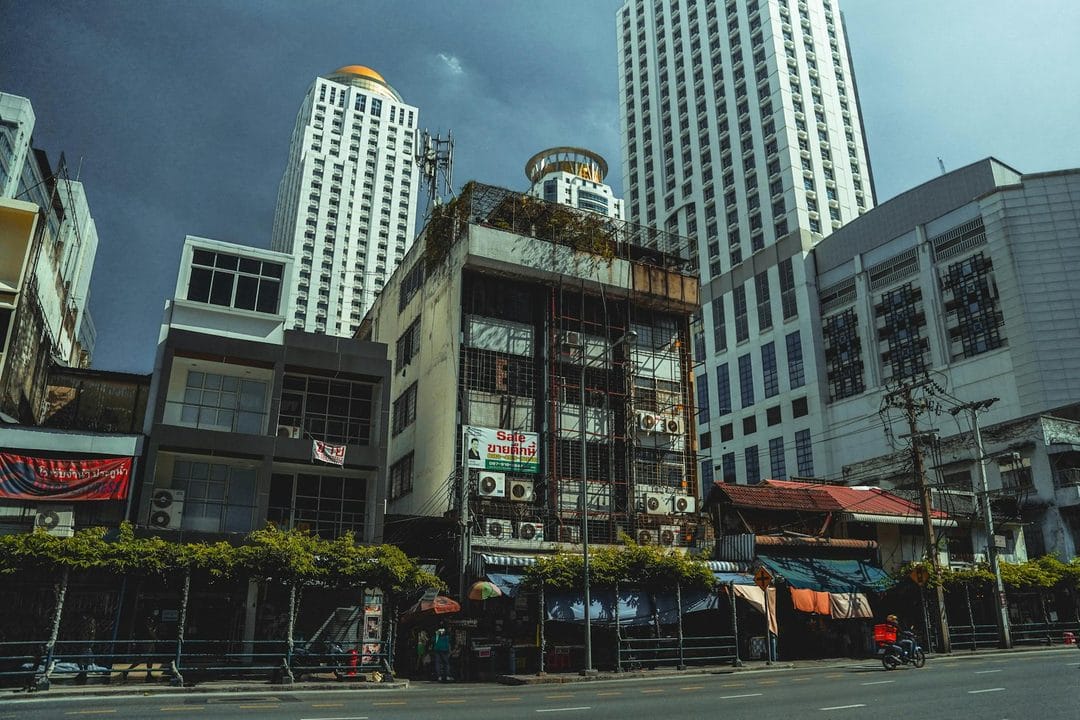
The Gap Between Knowing It's Hot and Actually Living It
Everyone who moves to Bangkok, Ho Chi Minh City, Singapore, or Kuala Lumpur does some version of the research. They check the average May temperature, find a number between 30 and 35 degrees Celsius, and think they understand what's coming. They don't. The number on a weather app captures nothing of what it feels like to walk three hundred metres to a taxi in 88% humidity carrying a laptop bag, or to discover that your apartment building's air conditioning shuts down for maintenance on the hottest afternoon of the month, or to realise that your carefully packed wardrobe — which felt perfectly light in the shop — turns into a wet tent within minutes of stepping outside.
Late May marks the beginning of the hardest stretch for recent arrivals: the pre-monsoon heat in Thailand and Vietnam, the humidity peak before Singapore's June rains, the scorching afternoons across Manila's dry-season tail. If you moved here in January or February, you've had a few months of relative grace. That grace period is over.
This is the practical guide for your first proper summer — the stuff that took me two seasons to work out and that I now tell every new expat who moves into my building.
The Air Con Question Is More Complicated Than You Think
The standard expat response to Southeast Asian heat is to run air conditioning at maximum power for as many hours as possible. This is expensive, makes you feel worse, and creates a real acclimatisation problem.
Aggressive air conditioning — the kind where you walk from a 19-degree room into 34-degree outdoor air — puts your body through a thermal shock twenty times a day. After a few months, your body stops acclimatising to the outdoor temperature at all, because it's never allowed to stay in it long enough. Expats who keep their apartments at 22 degrees year-round typically feel the heat more severely when they go out, not less. The ones who have genuinely adapted — who can walk to lunch without feeling destroyed — tend to keep indoor temperatures between 25 and 27 degrees and use ceiling fans for most of the day.
The energy bill difference is real too. In Bangkok, running a split-unit AC at 22 degrees in a standard one-bedroom apartment can easily add ฿2,500–4,000 per month to your electricity bill compared to running at 26 degrees with a fan supplement. That's a meaningful number when you're paying your own utilities.
Clothing: The Counter-Intuitive Rules
Western summer instinct says wear as little as possible. Southeast Asian heat experience says wear the right fabric at medium coverage. The difference matters.
Direct sunlight on bare arms in a tropical summer heats your skin faster than a light cotton shirt would. A loose linen shirt in white or light grey reflects heat and allows airflow in a way that bare skin doesn't. Uniqlo's AIRism range, available everywhere in East and Southeast Asia, has become the default for expat professionals for good reason — the fabric wicks fast enough that you're not wearing your commute sweat into your office meeting. A two-pack costs around ฿590 in Bangkok or SGD 29.90 in Singapore, and you will want four or five in rotation.
The footwear rule nobody mentions: closed shoes become near-unwearable in high-humidity cities unless you're going directly from air-conditioned car to air-conditioned office. If your walk involves any outdoor time, sandals or breathable mesh trainers are not a style choice, they're a practical necessity. Your feet sweat at roughly twice the rate of any other part of your body in tropical heat, and the dermatitis and fungal issues that result from ignoring this are genuinely unpleasant.
Hydration: Not What You Think You're Doing
Most expats believe they're drinking enough water. Most of them are not. The standard recommendation of two litres a day was calibrated for temperate climates. In Bangkok or KL, three to three-and-a-half litres is the floor on a day that involves any outdoor time. On days where you're commuting by motorcycle taxi or walking between meetings, four litres is not unusual.
The subtler issue is electrolytes. Sweat strips sodium, potassium, and magnesium far faster than plain water replaces them. If you're drinking litres of water but still feeling lethargic, with a dull headache and no appetite by mid-afternoon, you're probably salt-depleted, not dehydrated. A packet of Pocari Sweat — sold at every 7-Eleven in the region for around ฿15–20 in Thailand — contains roughly 21mmol of sodium per 500ml, which is about what you lose in an hour of active outdoor time. It is genuinely not a sports drink affectation; it's medicine at that point.
The other trap is alcohol. A Friday evening on a Bangkok rooftop with cold beers is one of the great pleasures of expat life in this part of the world. But alcohol in tropical heat dehydrates at a rate that surprises people who are used to drinking in colder climates. Two beers in Singapore humidity feel like three beers in London. Starting the next morning with 500ml of water before any coffee is not optional if you want to function.
The Morning-Window Rule for Exercise
Running at 6:00 AM in Bangkok is possible. Running at 7:30 AM is manageable. Running at 9:00 AM is an act of self-harm. The heat index — which combines temperature and humidity — typically crosses 35 degrees by 9 AM in Bangkok or Manila in late May, and outdoor aerobic exercise at that level carries a genuine heat exhaustion risk for someone who hasn't been in the tropics long.
The morning window is real and worth restructuring your schedule to use. Bangkok's Lumpini Park has runners from 5:30 AM who know something that the mid-morning gym arrivals don't. In Singapore, East Coast Park is navigable until around 8:30 AM before the sea breeze drops and the temperature spikes. Set your alarm, get the exercise done before 8:00 AM, and spend the middle of the day in shade or air conditioning. This is not a Western-style life hack; it's just how people who live well in the tropics structure their days.
When the Heat Actually Becomes a Medical Issue
Heat exhaustion — weakness, heavy sweating, cool pale skin, fast weak pulse, nausea, muscle cramps — is common among new arrivals in their first tropical summer. Heat stroke — hot red skin, rapid strong pulse, confusion, loss of consciousness — is less common but happens every year and kills people. The distinction matters because heat exhaustion responds to rest, fluids, and shade; heat stroke is a medical emergency.
If you're in Singapore, Bangkok, or Ho Chi Minh City, the hospital infrastructure is genuinely world-class. Bumrungrad in Bangkok, Mount Elizabeth in Singapore, and FV Hospital in Ho Chi Minh City all have emergency departments with English-speaking staff and fast triage. Your international health insurance — you do have international health insurance — will cover it. Don't tough out symptoms that are getting worse. Local residents who've lived here their whole lives occasionally need medical attention for heat illness; there's nothing heroic about not getting it.
The single most common mistake I see first-summer expats make is conflating feeling permanently tired with a general adjustment struggle and spending weeks pushing through it. Sometimes it's adjustment. Sometimes it's a mild, ongoing electrolyte deficit from under-hydration. A basic blood panel at any of the above hospitals — which costs around ฿1,200 at Bumrungrad for a walk-in — will tell you within an hour whether your sodium and potassium levels are actually in range.