Moving to Vietnam: The First 30 Days Checklist
You've landed in Tan Son Nhat Airport with two suitcases and a vague plan. Here's exactly what to do in your first 30 days to turn chaos into a functioning life.
Day Zero: The Airport to Your Temporary Base
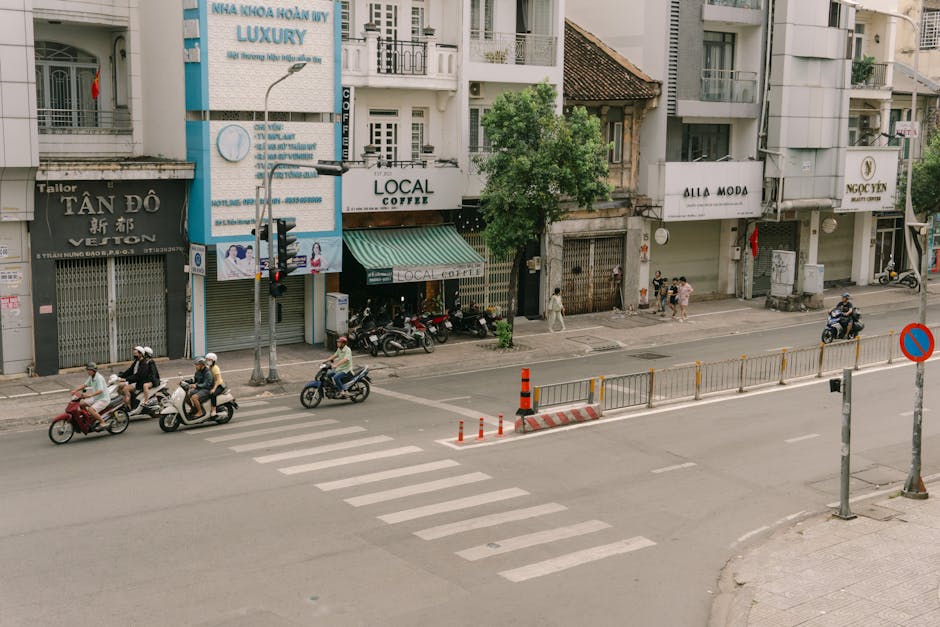
Stepping out of Tan Son Nhat International Airport in Ho Chi Minh City at any time of year hits you with three things simultaneously: the heat, the noise, and the motorbikes. Thousands of motorbikes. They fill every visible road in a swarm that looks anarchic but follows its own logic — a logic you'll understand in about three weeks and respect forever after. But right now, you're jet-lagged, sweating, and your phone doesn't work because you haven't bought a Vietnamese SIM card yet. Here's the first decision that matters: do not book a hotel in District 1's backpacker area (Bui Vien, Pham Ngu Lao). These streets are loud, touristy, and will give you a wildly inaccurate impression of the city. Instead, book your first 5–7 nights in a serviced apartment in District 2 (Thao Dien), District 3, or District 7 (Phu My Hung). Prices on Airbnb range from VND500,000–1,200,000 ($20–$48) per night, and these neighborhoods have the cafes, supermarkets, and walkability you'll need while getting oriented.
Days 1-3: The Essentials
SIM Card (Day 1, first hour)
Buy a Viettel, Mobifone, or Vinaphone SIM card at the airport or any phone shop. Viettel has the best coverage nationwide; Mobifone has competitive data plans. A prepaid SIM with 4GB daily data costs VND150,000–250,000 ($6–$10) for a month. You'll need your passport for registration. Once activated, download Grab (ride-hailing, food delivery, everything), Zalo (Vietnam's WhatsApp — landlords and businesses use it), and Google Maps (offline maps of HCMC and Hanoi). These three apps are more important than your visa in daily life.
Cash and Currency (Day 1)
Withdraw Vietnamese dong from an ATM — Techcombank and VPBank ATMs have the highest withdrawal limits (VND5,000,000–8,000,000 per transaction, roughly $200–$320) and the lowest fees. Avoid Vietcombank ATMs, which cap withdrawals at VND2,000,000 and charge VND50,000 ($2) per transaction. The exchange rate at airport counters is always bad; use ATMs instead. Vietnamese currency has many zeros — VND1,000,000 is about $40. You'll adjust to dropping zeros mentally within a week. Most purchases under VND500,000 are cash; larger purchases and upscale restaurants accept Visa and Mastercard.
Grab: Your First Transportation (Day 1)
Grab is the dominant ride-hailing app and your primary transportation for the first month. GrabBike (motorbike taxi) is the fastest way around HCMC — a typical 5km ride costs VND15,000–30,000 ($0.60–$1.20) and takes 10–15 minutes versus 30–45 minutes by car in traffic. GrabCar is available for longer rides or rain. Grab also handles food delivery (GrabFood), grocery delivery, and package sending. Link an international credit card or pay cash — both work.
Days 4-10: Finding Your Apartment
Do not sign a long-term lease in your first week. Spend days 4–7 exploring different districts to understand what suits your lifestyle, then start viewing apartments in your preferred area during days 8–10.
HCMC District Guide for Expats
District 2 (Thao Dien): The established expat hub. International schools, Western restaurants, tree-lined streets. Rents: VND10,000,000–25,000,000 ($400–$1,000) for a one-bedroom. Pros: easy social life, English widely spoken. Cons: expat bubble, higher prices, can feel insulated from Vietnamese culture.
District 3: Charming, central, mixed Vietnamese-expat neighborhood. Excellent street food, walkable, and more authentically Vietnamese than D2. Rents: VND8,000,000–18,000,000 ($320–$720). My personal recommendation for newcomers who want balance between comfort and cultural immersion.
District 7 (Phu My Hung): Planned city area, clean, quiet, family-friendly. Korean and Japanese expat communities are concentrated here. Rents: VND8,000,000–20,000,000 ($320–$800). Feels suburban by HCMC standards — great for families, potentially boring for singles.
Binh Thanh: Up-and-coming district with a younger Vietnamese and expat crowd. Near D1 and D2 with lower rents: VND6,000,000–14,000,000 ($240–$560). The Vinhomes Central Park complex is popular with expats who want modern amenities at moderate prices.
Apartment Hunting Mechanics
Facebook groups are the primary apartment hunting tool in Vietnam. Join "Saigon Expats Apartment Rental," "Ho Chi Minh City Apartments for Rent," and district-specific groups. Post your budget, desired area, and move-in date, and agents will flood your inbox within hours. Alternatively, contact agencies like Savills, CBRE Vietnam, or smaller local agents who specialize in expat rentals. Viewings are typically arranged same-day or next-day — the market moves fast.
Leases are usually 12 months with a two-month deposit. Negotiate the deposit down to one month if you can — many landlords will agree for good tenants. Rent typically includes building management fees but not electricity (VND3,000–4,000/kWh — budget VND500,000–1,500,000/$20–$60 per month for air conditioning) or internet (VND200,000–400,000/$8–$16 per month for 100–200 Mbps fiber). Get everything in writing, in English, and take photos of the apartment's condition before signing.
Days 11-20: Building Your Infrastructure
Bank Account
Opening a Vietnamese bank account as a foreigner requires a passport, visa, and temporary residence card or work permit. Without a work permit, most banks won't open an account — the workaround is Timo (a digital bank that's more flexible with documentation) or simply using your international bank card plus Wise for the first few months until your employment paperwork is processed. For daily payments, cash and Grab's e-wallet handle 95% of transactions.
Healthcare Setup
Register with a medical facility before you need one. FV Hospital (District 7), Vinmec (multiple locations), and Columbia Asia (District 1) offer English-speaking staff and international-standard care. A general consultation costs VND500,000–1,500,000 ($20–$60). International health insurance from Pacific Cross, April, or Cigna costs $1,500–$3,000 annually for basic coverage. Don't skip insurance — Vietnam's public hospitals are functional but challenging for non-Vietnamese speakers, and private hospital bills for serious issues can reach $10,000–$30,000 quickly.
Language Basics
Vietnamese is a tonal language with six tones, and mispronouncing a tone changes the word entirely — the classic example being "ma" which can mean ghost, mother, horse, rice seedling, grave, or "but" depending on the tone. You won't achieve fluency quickly, but learning 50–100 essential phrases transforms daily interactions. Start with: xin chào (hello), cảm ơn (thank you), bao nhiêu (how much), không (no), vâng/dạ (yes — formal), and tôi muốn (I want). Download the Vietnamese dictionary on Google Translate for offline use. iTalki tutors for Vietnamese cost $8–$15 per hour — significantly cheaper than Japanese or Korean tutors.
Days 21-30: Finding Your Rhythm
By week four, you should have an apartment, a phone number, a Grab account with saved addresses, a favorite coffee shop, and at least one person you can text when you need help. The remaining task is building the social and professional infrastructure that turns a temporary stay into a life.
Join the Saigon Runners Club (free, weekly runs departing from District 1), attend Saigon Tech meetups if you're in the tech industry, or sign up for Vietnamese cooking classes at HCMC Cooking Class or Saigon Cooking Class (VND600,000–900,000/$24–$36 per session). These activities provide both social connections and cultural depth that passive sightseeing can't match.
Set up your remote work infrastructure: test your apartment's WiFi during a video call before signing a lease extension. Identify 3–4 backup cafes with reliable WiFi near your apartment — The Workshop, Okkio, and Shin Coffee in D1/D3 are reliable workspaces. If power outages are common in your building (they happen occasionally in older buildings), invest in a portable battery pack for your laptop and keep your phone data plan generous enough to hotspot through a meeting.
Vietnam rewards speed and flexibility. The bureaucracy is real, the motorbikes are terrifying until they're exhilarating, and the coffee is the best you'll ever drink. By day 30, you'll understand why people who planned to stay three months end up staying three years.