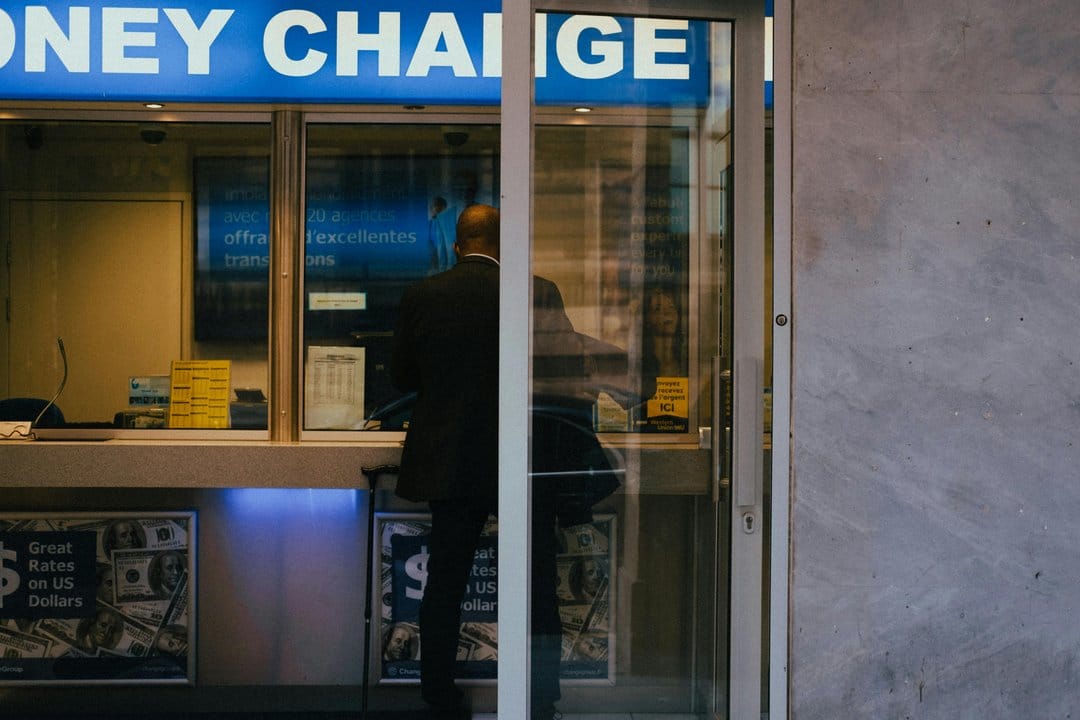
You can arrive in a new country with a job offer, a flat lined up and savings in the bank back home, and still find yourself stuck at a surprisingly basic obstacle: you cannot easily get paid, pay rent, or set up your phone until you have a local bank account. For new arrivals across East Asia, opening that first account is one of the earliest tests of patience — and the rules are far less uniform than people expect.
The one thing that decides everything: residency status
Across the region, the single biggest factor is not your nationality or your income — it is your legal residency status. Most banks distinguish sharply between a short-term visitor and a registered resident with the right documentation. The magic document is usually some form of residence card or registration certificate proving you live there legally and for a meaningful period.
This is why so many newcomers hit a wall in their first weeks. They have a visa, but not yet the residence card or local registration that the bank actually wants to see. The practical lesson: sort out your residence registration as your very first administrative task, because almost everything else — banking, phone contract, sometimes even a rental — cascades from it.
The documents you will generally need
Requirements differ, but a fairly standard checklist across the region includes:
- A valid passport.
- Your residence card or local registration document.
- Proof of a local address — a lease, a utility bill, or an official registration.
- Often a local phone number, which itself sometimes requires the residence card, creating a chicken-and-egg loop.
- In some countries, proof of employment or enrolment, or a local tax identification number.
Bring originals and copies of everything, and more than you think you need. Banks in the region tend to be document-driven and process-bound; turning up one paper short usually means coming back another day.
Country-by-country flavour
While the residency principle holds everywhere, the texture varies:
Japan is famously paperwork-heavy and often expects a residence card, a local address and frequently a personal seal (a hanko) for some institutions, though many banks now accept a signature. A local phone number is commonly required. Some banks impose a waiting period after arrival before a foreigner can open certain account types.
South Korea generally requires the foreigner registration card, which itself takes some weeks to be issued after arrival, so expect a gap. Once you have it, the process is usually efficient, and the country's banking apps are excellent.
Singapore is among the most foreigner-friendly for the digitally minded, with several banks and digital-first providers offering relatively smooth onboarding for residents, though documentation and an employment pass still matter.
Mainland banking, Hong Kong, Taiwan and the Southeast Asian hubs each add their own quirks, from minimum balance requirements to in-person interview steps. The common thread is that the more established your local status, the smoother the path.
The traps that catch people out
- The chicken-and-egg loops. You need a phone for the bank, a bank for the phone, an address for both. Untangle the order locally before you arrive — expat communities and your employer's HR are gold here.
- Language at the counter. Even where staff speak some English, the forms and terms often do not. Going in with a local-speaking colleague or friend, or to a branch known to handle foreigners, saves enormous frustration.
- Branch lottery. Two branches of the same bank can give different answers. If one refuses or stalls, another — particularly in areas with many foreign residents — may be far more practised.
- Tax reporting obligations. Opening a foreign account may carry reporting duties back in your home country. It is worth understanding these from the start rather than discovering them later.
A smoother path
The newcomers who breeze through tend to do three things: they treat residence registration as task number one, they research the specific bank and even the specific branch known to be foreigner-friendly before going in, and they over-prepare their documents. A useful stopgap while you wait for full local banking is a multi-currency or international digital account opened before you move, which can hold money and make local transfers in the meantime.
It is rarely as quick as back home, and the first attempt may not succeed. But once that local account exists, the rest of settling in — salary, rent, bills, the phone that finally works — clicks into place. Treat it as the keystone of your arrival admin, and tackle it first.