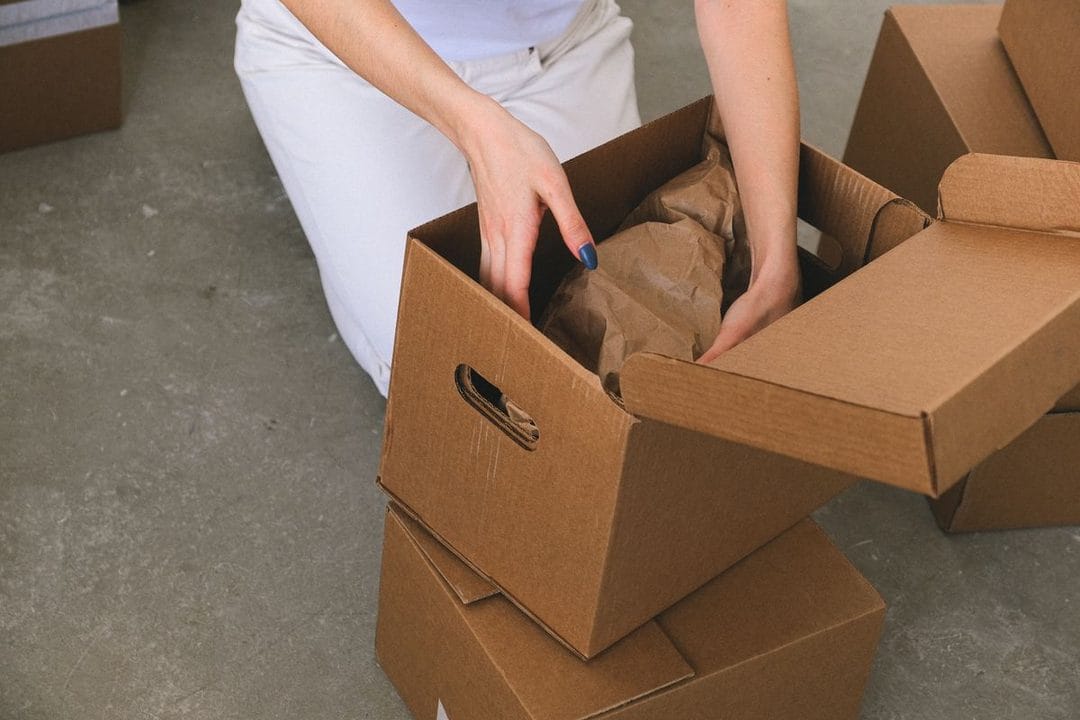
The container quote arrives and it's almost always higher than you expected — and the first instinct for most people moving to Asia is to pack the entire house into it anyway, out of some vague sense that shipping is what "real" relocations do. It usually isn't the right call. A full 20-foot container from a mid-sized European or US city to Singapore, Bangkok or Ho Chi Minh City runs somewhere between $3,500 and $6,000 door-to-door, and that's before customs duty, port handling fees, and the inevitable "additional services" line that shows up on the final invoice. For a couch, a bed frame and some kitchenware, that math rarely works.
Work Out What's Actually Worth Shipping First
Before you call a single mover, sit down and separate your belongings into three piles: things you cannot replace locally (family furniture, specific medical equipment, a piano), things that cost less to ship than to rebuy (a good mattress, a full kitchen set, quality tools), and everything else. Most expats overestimate how much falls into the first two categories. Furniture in particular is a trap — a solid oak dining table that cost £800 in the UK will cost roughly the same or less from a mid-range furniture shop in Kuala Lumpur or Bangkok, and you avoid three months of it sitting in a warehouse waiting for customs clearance.
Electronics deserve their own line of thinking. Voltage in most of Asia runs 220–240V (Japan is the exception at 100V), so US appliances bought on a 110V system are often not worth shipping at all once you account for a step-down transformer. Furniture and appliances aside, the category that actually justifies air freight or a small LCL shipment is usually books, specific kitchen equipment you can't source locally, children's items tied to routine (a particular crib, a favourite bike), and documents or heirlooms with no replacement value. Sell or donate the rest before you leave — Facebook Marketplace and local expat departure groups move furniture fast in most origin cities, and the cash offsets part of the shipping bill for what you do keep.
Sea Freight: FCL vs LCL, and What Each Actually Costs
Sea freight comes in two forms. A Full Container Load (FCL) means you rent an entire 20-foot or 40-foot container and nobody else's belongings touch yours — useful if you're shipping a genuine full household, but wasteful for a one- or two-bedroom apartment's worth of goods. Less-than-Container Load (LCL), also called consolidation, groups your shipment with several other households' goods inside a shared container. LCL is priced by volume (cubic metre, or CBM) rather than by the container, and for most single-person or couple moves it's the cheaper option: expect $150–$300 per CBM from major European hubs to Southeast Asia, with a typical one-bedroom apartment running 8–15 CBM.
The trade-off is time and handling. FCL goes point to point with minimal handling and typically arrives in 4–6 weeks from Europe, 2–3 weeks from the US West Coast. LCL has to be consolidated at origin and deconsolidated at destination, which adds 2–4 weeks and increases the odds of minor damage — more hands touch the boxes. Crown Relocations, Santa Fe Relocation and PSS International Movers all run regular LCL consolidation routes into Singapore, Bangkok, Ho Chi Minh City and Kuala Lumpur, and it's worth getting quotes from at least two of them rather than accepting the first number: rates on the same route can vary by 20–30% between operators depending on how full their current consolidation run is.
When Air Freight Actually Makes Sense
Air freight costs four to six times more per kilogram than sea freight, so it's rarely the right choice for furniture or bulk goods. Where it earns its price is for a small, urgent shipment — the box of work equipment, medication, or children's essentials you need within a week rather than two months. Budget roughly $8–$15 per kilogram door-to-door for air freight into most Asian capitals, against $1.50–$3 per kilogram equivalent for sea freight. A single 30kg air shipment might run $350–$450; the same weight by sea, bundled into a larger LCL load, might cost a tenth of that. Use air freight for the narrow, time-sensitive category and let everything else go by sea.
Customs Duty-Free Allowances, Country by Country
Every country in the region treats "used household goods" differently, and the paperwork trail matters more than the goods themselves.
- Singapore: used personal effects are duty- and GST-free if you hold an Employment Pass, Dependant's Pass or equivalent and the goods have been in your possession for a documented period before shipment. Singapore Customs requires an In-Payment Permit application (via TradeNet) even for duty-free entry — miss this step and your container sits at the port racking up storage fees.
- Thailand: household goods brought in within six months of arrival on a Non-Immigrant visa are generally duty-exempt, but Thai Customs is strict about matching the shipment's contents list against your visa and work permit documentation. New-looking items or anything still boxed can trigger a duty assessment even if it's genuinely used.
- Vietnam: used personal effects are duty-free for diplomats and certain work-permit holders, but the exemption for ordinary foreign residents is narrower than in Singapore or Thailand, and new electronics almost always attract duty regardless of stated use.
- Japan: personal effects owned and used for at least six months before the move are duty-free, but Japan Customs requires a detailed itemised inventory in Japanese or English submitted before the shipment clears — an incomplete list is the single most common cause of delay at Japanese ports.
- Malaysia: holders of an Employment Pass or MM2H visa typically get duty-free entry on used household goods within a set window of their pass being issued, administered by the Royal Malaysian Customs Department (Jabatan Kastam Diraja Malaysia).
The pattern across all five is the same, even though the specific rules diverge: duty-free treatment depends on the goods being genuinely used, on your visa or work permit already being in hand, and on a complete, honest inventory submitted before the shipment lands. Get any one of those three wrong and you'll pay duty on a load that should have cleared for free.
What Not to Pack
Every one of these countries maintains a list of prohibited or restricted imports that catches out first-time movers far more often than it should. Pornographic material, counterfeit goods and pirated media are banned across the entire region and will be seized on discovery — Singapore in particular treats this seriously. Plants, seeds, soil and untreated wood items require phytosanitary certificates almost everywhere and are simplest to just leave behind. Firearms, ammunition and even some knives need permits arranged well in advance, not sorted out after the container has sailed. Medications are their own hazard: bring a doctor's letter and keep prescription drugs in original packaging, because several countries in the region — Japan and Thailand especially — restrict or ban medications that are entirely legal and over-the-counter at home, including some common stimulant-based ADHD medications and codeine-containing painkillers.
Insurance Is Not Optional
Movers' standard liability coverage is usually calculated by weight, not value — meaning a $2,000 laptop that gets crushed in transit might net you a $60 payout under the base terms. Buy separate all-risk marine cargo insurance, typically priced at 2–3% of the declared value of your shipment, and photograph everything before it's packed. Claims move faster with a photo timestamp and a clear inventory than with a verbal description of "some kitchen items." This is the one place where it's worth paying more up front: a $150 insurance premium on a $6,000 shipment is cheap compared to arguing with a shipping line's claims department over a shattered dining set.
Timing the Shipment Around Your Visa and Lease
Sea freight timelines and visa processing rarely line up cleanly, so build in slack on both ends. Book the pickup at origin only once your work permit or long-stay visa is confirmed, not merely "in progress" — several relocation companies will hold a shipment at origin for a fee if your visa gets delayed, but a container that's already sailed and arrives before your visa clears sits in bonded storage, which usually costs more per week than the shipping itself. On the destination side, don't sign a lease with a move-in date that assumes the container clears exactly on schedule. Add a buffer of at least two weeks past the mover's quoted arrival date before committing to vacate a serviced apartment or short-term rental, because port congestion and customs spot-checks are common enough in Bangkok, Ho Chi Minh City and Jakarta that "on schedule" is closer to a best-case estimate than a guarantee.
The Pitfalls Nobody Mentions Until It's Too Late
Storage fees at the destination port accrue from the day the container is available for collection, not from the day you're ready to receive it — a two-week delay in signing a lease can rack up several hundred dollars in demurrage before a single box reaches your new apartment. Door-to-door quotes sometimes exclude the final leg if your new building has narrow lift access or no loading dock, which is common in older shophouse conversions in George Town or Hanoi's Old Quarter; ask specifically whether the quote includes manual carry-up and how many flights are covered before you sign. And the contents list you submit to customs needs to match what's actually in the boxes — movers occasionally pack a last-minute box of "misc" items that never made it onto the inventory, and that single unlisted box is exactly the kind of thing a customs spot-check flags for a full unpack-and-reassess, delaying the entire shipment by days over a bag of extension cords.
None of this makes shipping to Asia especially difficult — thousands of households do it every month without incident. It rewards the boring, unglamorous parts of the process: an honest inventory, insurance bought before the container leaves, and a visa sorted before the pickup date rather than around it.