Nobody Warns You About the Smell
The first thing that surprises most expats about their first monsoon isn't the rain itself — it's the way the whole city changes. The heat breaks, which is welcome, but it gets replaced by a thick humidity that settles into everything: your clothes, your furniture, the walls. In Bangkok or Ho Chi Minh City or Mumbai, the air before a monsoon downpour carries a particular weight, and the smell that rises from streets and drains when the rain hits is something no amount of prior research prepares you for. Veteran expats know to keep windows closed during the first hour of a heavy downpour and to check their bathroom drains weekly once the wet season starts.
The seasonal shift happens at different times depending on where you are. India's southwest monsoon typically arrives over Kerala in early June and progresses north over the following weeks. Thailand's rainy season spans roughly May to October, though the heaviest rainfall in Bangkok lands between August and October. Vietnam has a more complicated picture: the north and south have different wet season windows, and the central coast — places like Da Nang and Hoi An — gets its heaviest rain in October and November, well after the rest of the country has dried out. If you've been in Asia a few years and move from one country to another, don't assume the calendar you knew still applies.
Transport Calculus Changes Completely
Monsoon season turns commuting into a problem you have to plan around rather than just experience. In cities where motorbikes are the dominant mode of short-distance travel — Ho Chi Minh City, Hanoi, most of Indonesia — a serious downpour effectively halts movement for anything without a roof for twenty to forty minutes. Locals know to pull under awnings and wait; new expats who try to push through on a bike end up drenched and, more usefully, late anyway. A cheap waterproof poncho — the kind sold at every roadside stall in Vietnam for about 50,000 VND — is more useful than any branded rain jacket for actual bike commutes because it covers both you and the bag on your lap.
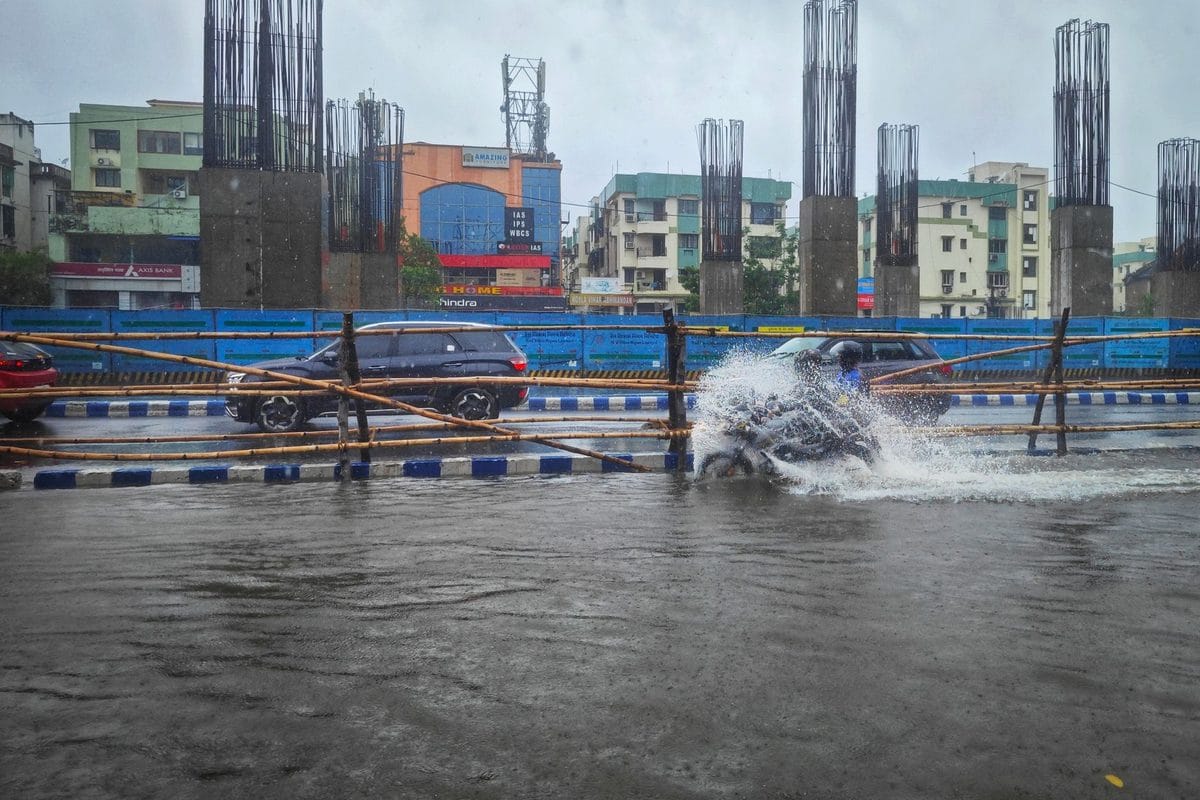
Urban flooding is a separate issue. Bangkok's drainage system has improved considerably over the past decade, but certain streets in older districts still flood during severe rain and can stay impassable for hours. The trick locals use isn't to look at the rain itself but to watch the weather apps that report accumulated rainfall in the preceding twelve hours: after 80–100mm in a day, specific low-lying roads become unusable, and knowing which ones in your neighbourhood is genuinely useful knowledge. I learned this after ordering a Grab car that sat six blocks away for forty minutes because the street between us was knee-deep.
Your Apartment Is a Different Place Now
Mould is the major domestic issue that expats underestimate. In apartments without adequate ventilation or dehumidification, clothing left hanging will develop mould in days during peak humidity. This is especially acute in older buildings and those built primarily for tropical aesthetics — high ceilings, louvred shutters, tiled floors — rather than for humidity management. A dehumidifier running in a bedroom or wardrobe room during the wet months is not optional in these buildings; it's the difference between usable clothes and a wardrobe full of casualties.
Leather goods, wooden instruments, paper documents and anything with glue or adhesive all react badly to sustained humidity above 80 percent. If you're moving to Southeast Asia and you care about your record collection or your guitar, the first investment should be a hygrometer — a small device that measures humidity in the room — not a bookshelf to display them on. They cost less than ten dollars on Shopee or Lazada and tell you immediately whether the room your belongings are sitting in is safe.
Air conditioning helps, but it creates its own problem: the condensation pan under the unit fills quickly during humid weather and, if the drain isn't clear, overflows. In four years of renting in Southeast Asia, the single most common maintenance call I've had to make is a blocked AC drain during monsoon season. Clear it yourself with a wet-dry vacuum or pay a technician 300–500 baht — it takes twenty minutes and protects a ceiling you'd otherwise be replastering.
Health Patterns Shift
Dengue fever peaks during and just after the wet season across most of Southeast Asia. The Aedes aegypti mosquito that carries it breeds in standing water — exactly the kind that monsoon rain creates in containers, gutters, planters and building sites. Expats who've been through a bad dengue year in their city develop specific habits: emptying any water containers on the balcony weekly, covering overhead water tanks, running the bathroom extractor fan even when not showering, and using topical insect repellent during evening hours rather than just during outdoor activities.
This is not abstract health advice. Dengue is not mild — a typical case involves five to seven days of fever, severe joint pain and fatigue that can take two to three weeks to fully clear. It doesn't respond to antibiotics, there's no effective antiviral, and the only management is supportive care. Private hospital treatment for a dengue case in Thailand runs roughly 40,000–80,000 THB depending on severity and hospital tier. Make sure your health insurance explicitly covers it and that you know which local hospital your policy is valid at before the season starts, not after you have a fever.
The Calendar Rearranges Itself
After one monsoon season, most expats quietly restructure how they plan their weeks. Outdoor evening events — dinners, markets, open-air concerts — get pencilled in rather than confirmed until the morning of. Laundry cycles shorten from weekly to twice-weekly because things don't dry quickly enough in humid air to let them sit. Grocery runs shift from market trips to online delivery because the gap between downpours can be unreliable. None of these are dramatic changes, but they add up to a different way of living in a city that the relocation guides don't quite capture.
The expats who handle monsoon best are the ones who stop treating it as bad weather to endure and start treating it as a season with its own logic. The city is quieter in the post-rain hour, the air is washed clean, the temperatures drop to something manageable, and the streets that aren't flooded take on a quality that's genuinely pleasant. Learning which streets flood and which don't is local knowledge — the most useful kind.