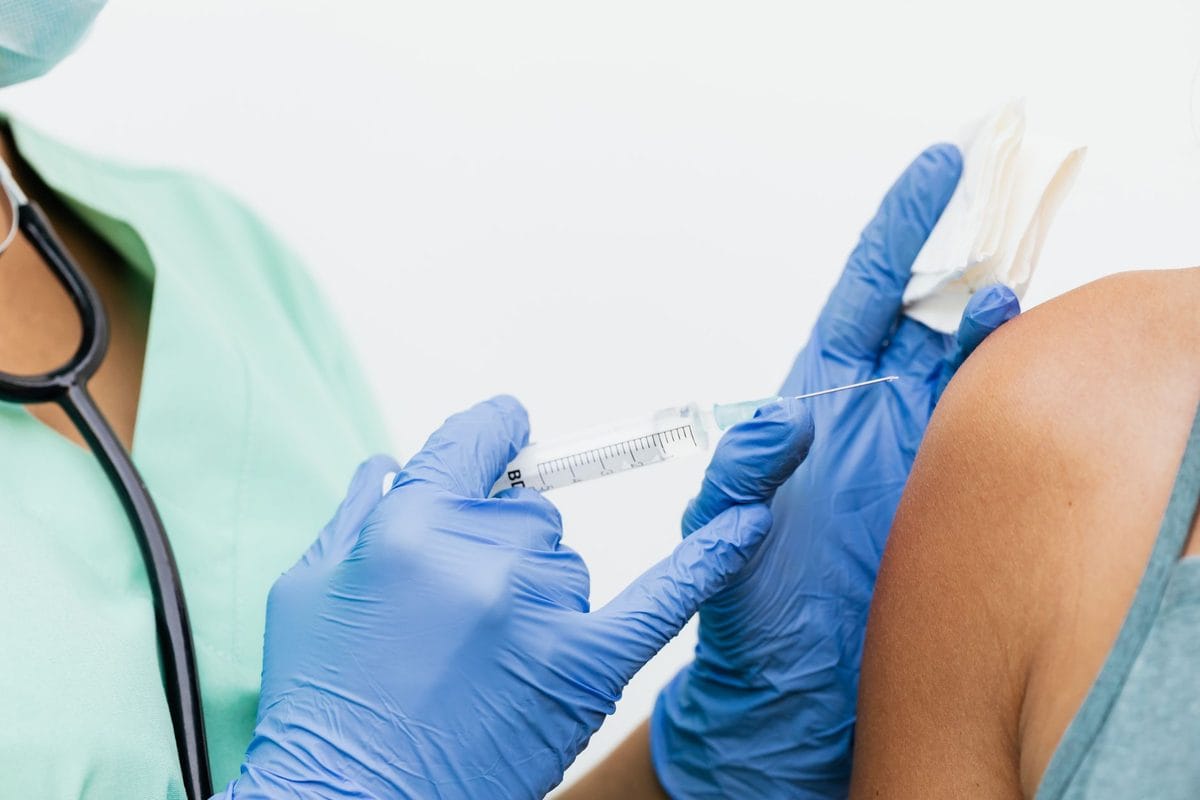
Japan's health ministry declared the start of the flu season on August 28, about a month earlier than last year and the second-earliest start since records began in 1999, The Japan Times reported. In the ministry's October 2 update, the average number of patients per monitored clinic had passed 1.0 in all 47 prefectures, and Okinawa stood at 42.50 against a warning level of 30. Hong Kong's Centre for Health Protection says its own season began in late June, Korea's disease agency pulled its vaccination calendar forward after an early outbreak among schoolchildren, and Taiwan's CDC counted 1,673 severe cases and 334 deaths for the 2025–26 season by late September. If you moved to Asia in the past year and assumed a flu shot could wait until November, the calendar has already moved without you. The four places below run very different programs, with different rules on who gets the shot free, who pays, and how you book.
The Short Version
| Place | Free or subsidized | Everyone else pays | Program start |
|---|---|---|---|
| Japan | Age 65 and over (city fee ¥0–¥2,500 in this season's examples); some city subsidies for children | The clinic's own price, commonly ¥3,000–¥5,000 | Usually October 1; some wards opened in late September |
| South Korea | Children 6 months to 14, pregnant women, age 65 and over | Typically ₩25,000–₩50,000 | September 21 |
| Hong Kong | HK$260 per-dose subsidy at private doctors, or free public service, for age 50+, children 6 months to under 18, pregnant women, and ages 18–49 with a chronic illness or disability | Roughly HK$220–HK$250 and up | September 17 |
| Taiwan | Free for eleven groups, including 65+, children under school age, pregnant women, and people with chronic conditions or a BMI of 30+ | The clinic's own price | October 1 (adults 50–64 join November 2) |
What Changed in the Vaccine This Year
Last year's flu shot is not this year's flu shot.
The World Health Organization's northern-hemisphere recommendation for 2026–27, published on February 27, replaced all three viruses in the vaccine: a new H1N1 strain (A/Missouri/11/2025), a new H3N2 strain (an A/Darwin virus from 2025) and a new B/Victoria strain. WHO's statement describes a variant called subclade K, an H3N2 virus that appeared in August 2025 and, in the agency's words, "contributed to an earlier start to the influenza season in many countries." Hong Kong, Korea and Taiwan are all giving trivalent vaccines this winter, after WHO advised dropping the B/Yamagata component because no case has been recorded since March 2020. Protection takes about two weeks to build, according to Hong Kong's CHP, and the CHP's analysis of last season found that among children who caught the flu, severe complications or death were about five times as common in unvaccinated ones as in vaccinated ones, while care-home residents aged 65 or older who skipped the shot had about four times the rate of severe complications. Neither group may be you, but the two-week lag applies to everyone, which is the real argument for booking this month instead of next.
Japan: Insurance Does Not Cover the Shot, and Every Clinic Sets Its Own Price
A flu vaccination counts as prevention, not treatment, so neither National Health Insurance nor an employer plan pays for it, and that holds for Japanese and foreign residents alike, according to the health ministry's own Q&A. For working-age adults the shot is a voluntary vaccination priced by each clinic; published price lists commonly land between ¥3,000 and ¥5,000 per adult dose, so ask for the number when you phone. The routine program is different: it covers everyone 65 and over, plus some 60–64-year-olds with severe heart, kidney or respiratory disability, and your city decides how much of the fee you pay. For 2026–27 that means ¥2,500 for ages 65–74 in Shinjuku (free from 75), ¥2,300 in Yokohama, ¥1,500 in Nagoya and nothing in Shinagawa. There is no nationality condition, only a resident record in the city that runs the program. Children are usually vaccinated voluntarily, but many wards subsidize them in very different amounts: Shinjuku charges residents under 19 ¥700 per injection, Shinagawa takes ¥2,000 off each one, and Chiyoda makes it free. Subsidies only work at the ward's listed clinics, though, and both Shinagawa and Chiyoda say a shot at a clinic in another ward is paid in full.
Booking is the part that surprises newcomers. There is no national portal; you phone or book online with an internal medicine clinic (naika) or, for children, a pediatric clinic, and vaccine stock reaches clinics on different dates even within one city, which is why Shinjuku and Yokohama both ask residents to call first. Do that. Bring photo ID, and for a routine shot, the questionnaire your city mailed you if it sent one. At the clinic you fill in a yoshinhyo, a Japanese-language yes-or-no health questionnaire, and then wait about 30 minutes afterward in case of an allergic reaction; the injected vaccine is made with hens' eggs, so an egg allergy belongs in the question about reactions to medicines or foods. The ministry says to finish by mid-December, but with the season already declared that is a ceiling, not a target. If your Japanese runs out at the reception desk, the Japan National Tourism Organization's medical institution search filters clinics by prefecture and language, and Tokyo's Himawari line (03-5285-8181) answers in English, Chinese, Korean, Thai and Spanish from 9 a.m. to 8 p.m.
One piece of Japanese logic cuts the other way. The shot is full price, but if you catch the flu anyway, the consultation and antiviral medicine count as treatment, so insurance covers them (typically 30 percent of the bill for working-age adults), and the ministry notes that antivirals started within 48 hours of onset usually shorten the fever by one to two days.
South Korea: Free for Children and Seniors, Paid for Everyone Else, and the Dates Moved
The national program runs from September 21 to April 30, 2027, and is free for children from 6 months to 14 (the cap was 13 last season), pregnant women and adults 65 and over. On September 16 the Korea Disease Control and Prevention Agency (KDCA) moved the schedule forward because of the early outbreak: all eligible children can go from September 21, people 75 and over from October 6, ages 70–74 from October 12, and ages 65–69 from October 15, with people who have weakened immune systems eligible from October 6 regardless of age. Guides written before mid-September still show the August schedule, which started the seniors on October 12, 15 and 19, so check the date before you send a parent or a grandparent to a clinic. You can use any of the roughly 23,000 designated clinics or public health centers, regardless of where you are registered. The Korea JoongAng Daily reported that children with foreign nationality are covered as long as they hold a registration number, so bring your child's alien registration card and have the clinic confirm before you sit down in the waiting room.
Working-age expats pay, and the price depends on the clinic and the brand: typically ₩25,000 to ₩50,000, with the Health Insurance Review and Assessment Service publishing clinic-by-clinic price comparisons for non-covered care. Book now rather than in November. The KDCA secured about 12.33 million doses for the national program, but because all three strains changed, the total produced and imported is roughly 4 million doses below last year, and the agency says a B-type reference standard that reached manufacturers about a month later than last season delayed production and shipments. It set aside another 370,000 doses for private vaccination and said plainly that private supply is not as ample as in previous years.
Hong Kong: Subsidies for 50 and Over, Children and Chronic Conditions
The 2026/27 programs began on September 17, and the Centre for Health Protection said activity was still high when it announced them on August 31. Free or subsidized vaccination is for Hong Kong residents aged 50 and over, children from 6 months to under 18, pregnant women, and people aged 18–49 with a chronic illness or a disability. Through the Vaccination Subsidy Scheme, enrolled private doctors receive HK$260 per dose from the government, and over 1,200 of them operate at more than 1,900 locations; the doctor may still add a fee of their own. Everyone 18 or older has to be registered with eHealth first, and at least one clinic group tells patients to bring the original Hong Kong identity card, so sort out both before the appointment. A healthy 30-year-old on an employment visa falls outside every group, which means paying the private price; 2026/27 price lists from clinic and hospital operators start at roughly HK$220 to HK$250 per dose and climb with the vaccine brand and the consultation fee.
Taiwan: Residence-Permit Holders Are In, but Only If You Fit One of Eleven Groups
The free program that started on October 1 is open to Taiwanese citizens and to foreign nationals holding a residence permit, as long as they belong to a listed group. The groups include adults 65 and over, children from 6 months to primary-school entry, students in Taiwan's school system, pregnant women, health-care and child-care workers, parents or caregivers of infants under 6 months, and people with high-risk chronic conditions or a BMI of 30 or higher, among others. A child whose parents are both foreigners with neither National Health Insurance nor a residence permit pays out of pocket. Adults 50–64 without a high-risk condition join the program on November 2; before that, and for healthy adults younger than 50, you pay the clinic's own price. About 4,000 contracted clinics take part. Find one through the CDC's vaccine map or the 1922 hotline, phone to book, and bring your National Health Insurance card plus the document that proves your group, such as a child's health booklet or a pregnancy handbook. Taiwan's CDC says 67.7 percent of the severe cases it counted this past season had not received that season's flu vaccine.
If You Live Closer to the Equator
Singapore, Bangkok and Kuala Lumpur don't follow the autumn calendar above, and the programs and prices there deserve their own guide. What can be said now is that WHO's September 25 recommendation for the 2027 southern-hemisphere season lists the same three viruses as the northern-hemisphere recipe for this winter, so ask the clinic which formula it is giving: a dose made to either recipe contains the same strains. Whichever city you are in, the two weeks your body needs start on the day of the injection, not the day you decide to go, so put the appointment in your calendar before you close the clinic's web page.