Singapore's Hawker Centers: The Best Cheap Food on Earth
Michelin stars for $3.50. UNESCO heritage status. 114 hawker centers across one tiny island. Singapore's food culture is the best argument against cooking at home.
Why Hawker Centers Exist
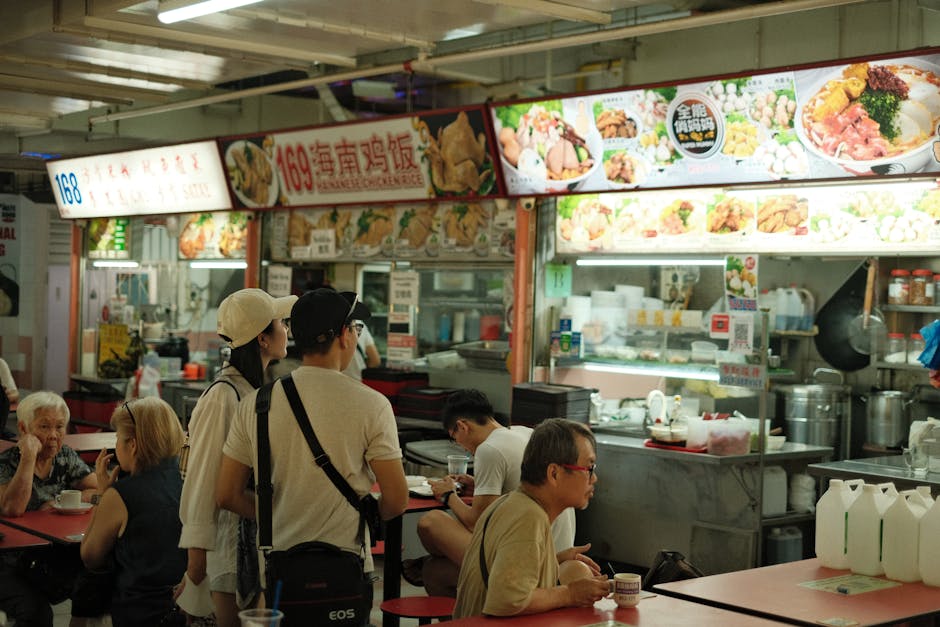
In the 1960s and 1970s, Singapore's streets were lined with unlicensed food carts — hawkers who cooked over charcoal fires on sidewalks, serving the working class meals they couldn't afford at restaurants. The government, in a characteristically Singaporean move, didn't ban them. They organized them. Purpose-built hawker centers went up across the island — open-air food courts with individual stalls, communal seating, and standardized hygiene requirements. Today, there are 114 hawker centers and about 6,000 stalls across Singapore, and they represent the single greatest food value proposition in any first-world city on earth. In 2020, UNESCO inscribed Singapore's hawker culture on the Representative List of Intangible Cultural Heritage, which is a fancy way of saying that the entire world officially recognizes that Singaporeans figured out how to eat magnificently for almost nothing.
For expats, hawker centers solve the daily eating problem completely. You can eat three full meals a day at hawker centers for S$15–25 ($11–$18.50), with more variety and higher quality than most restaurants offer at five times the price. This isn't poverty eating — it's the way the majority of Singaporeans eat, from students to millionaires. The stalls represent generational expertise; many have been operated by the same family for 40+ years, with recipes refined over decades and execution honed through hundreds of thousands of repetitions. Understanding how hawker centers work is the most important food skill an expat in Singapore can develop.
How Hawker Centers Work
The mechanics are simple but have unwritten rules that take newcomers a few visits to grasp. Walk through the center and look at the stalls. Each stall displays a menu with prices, usually with photos. Queue at the stall you want, order and pay, and either wait for your food at the stall or receive a buzzer (increasingly common at busier stalls). Carry your food to any available table. There are no assigned seating areas — the tables are communal, and sitting with strangers during busy hours is expected and normal.
Table choping (reserving) is the most Singaporean custom you'll encounter. People place a packet of tissue paper on a table or chair to claim it while they queue for food. This is universally understood and respected — moving someone's tissue packet is a social violation on par with cutting in line. Keep a pack of tissues in your bag specifically for this purpose. Some hawker centers have also implemented tray return policies, with designated stations where you return your tray and dishes after eating. Compliance is expected, and clearing your own tray is considered basic courtesy.
Drinks and Desserts
Most hawker centers have separate drink stalls (often called "drinks uncle" or "drinks auntie" stalls) where you can order kopi (local coffee), teh (tea), fresh juices, and other beverages. The ordering system for kopi deserves its own guide: kopi is coffee with condensed milk, kopi-O is black coffee with sugar, kopi-O-kosong is black coffee with no sugar, kopi-C is coffee with evaporated milk, and kopi-gao is extra strong. These modifiers combine in ways that create dozens of permutations, and getting your order right is a minor rite of passage. Drinks cost S$1.20–$2.50 ($0.89–$1.85).
The Essential Dishes to Know
Chicken rice (海南鸡饭): Singapore's de facto national dish. Poached chicken served over rice cooked in chicken fat and pandan leaf, with chili sauce, ginger paste, and dark soy. A plate costs S$3.50–$5.50 ($2.59–$4.07). Tian Tian at Maxwell Food Centre is the most famous stall (and the one with the permanent queue), but honestly, good chicken rice is everywhere. Wee Nam Kee and Boon Tong Kee are reliable chains.
Laksa: A coconut-based curry noodle soup with prawns, fish cake, bean sprouts, and sambal. Rich, spicy, and deeply satisfying. A bowl runs S$4–$6. 328 Katong Laksa on East Coast Road is the cult favorite, but Sungei Road Laksa at Jalan Berseh is equally excellent and cheaper.
Char kway teow: Flat rice noodles stir-fried with soy sauce, chili, prawns, cockles, Chinese sausage, bean sprouts, and egg. The wok hei (smoky breath of the wok) is what separates great char kway teow from ordinary fried noodles. Hill Street Char Kway Teow is legendary; expect a 30-minute queue. S$4–$6 per plate.
Roti prata: Indian-influenced flatbread served with fish or chicken curry. The plain version is S$1.20–$1.50, and you can add egg, cheese, banana, or mushroom for small upcharges. Mr and Mrs Mohgan's at Joo Chiat Place makes what many consider the best prata in Singapore — thin, crispy, with layers that pull apart in your hands.
Nasi lemak: Coconut rice with sambal, fried anchovies, peanuts, egg, and a protein (fried chicken wing is the classic). Originally Malay, now universally Singaporean. S$3–$5. The Coconut Club in Ann Siang Hill has elevated the dish to restaurant quality (at restaurant prices), but the hawker versions at Adam Road Food Centre are excellent.
The Best Hawker Centers for Newcomers
Maxwell Food Centre (near Chinatown MRT): The most tourist-friendly center with Tian Tian chicken rice, Zhen Zhen porridge, and excellent Fuzhou oyster cake. Renovated in 2020, clean, and easily accessible. Start here.
Old Airport Road Food Centre (near Dakota MRT): The largest hawker center in Singapore with 150+ stalls. Less touristy than Maxwell, more local. Outstanding carrot cake (chai tow kway), bak chor mee (minced pork noodles), and rojak (fruit and vegetable salad in shrimp paste). This is where food obsessives come.
Tiong Bahru Market (near Tiong Bahru MRT): Smaller, quieter, in one of Singapore's most charming neighborhoods. Excellent chwee kueh (steamed rice cakes), lor mee (braised noodle soup), and Tiong Bahru Hainanese Boneless Chicken Rice. The surrounding neighborhood has fantastic independent cafes and bookshops for post-meal exploration.
Lau Pa Sat (near Raffles Place MRT): A beautiful Victorian-era building in the financial district. During lunch, it's packed with office workers. In the evening, Boon Tat Street (adjacent) transforms into a satay street with dozens of grills serving skewered meat. Touristy but genuinely excellent satay at S$0.70–$1.00 per stick.
Chomp Chomp Food Centre (near Kovan MRT): The evening hawker center — most stalls open at 5 PM. Known for satay bee hoon (satay with rice vermicelli), barbecue chicken wings, and the overall atmosphere of a communal outdoor dining party. Best on weekday evenings when the queues are shorter.
The Future of Hawker Culture
Singapore's hawker culture faces a generational crisis. The average hawker is 60 years old, and their children — many of whom obtained university degrees thanks to their parents' hawker income — overwhelmingly choose different careers. The government has responded with incubation programs, subsidized rental stalls for young hawkers, and skills courses. New hawker centers like Our Tampines Hub feature modern facilities designed to attract younger operators. But the reality is that some iconic stalls will close within the next decade as their operators retire without successors, and the dishes they perfected over lifetimes will disappear with them.
As an expat, the best thing you can do is eat there. Regularly. Bring your friends. Try the stalls that don't have queues — they're often just as good as the famous ones and need the business more. Tip if you feel like it (it's not expected in Singapore, which makes it more appreciated). And recognize that a S$3.50 plate of chicken rice made by a 70-year-old hawker who's been perfecting this exact dish since 1978 is not just cheap food. It's a living piece of cultural heritage on a melamine plate, and you're lucky to be eating it while it's still here.