The Tale of Two Cities
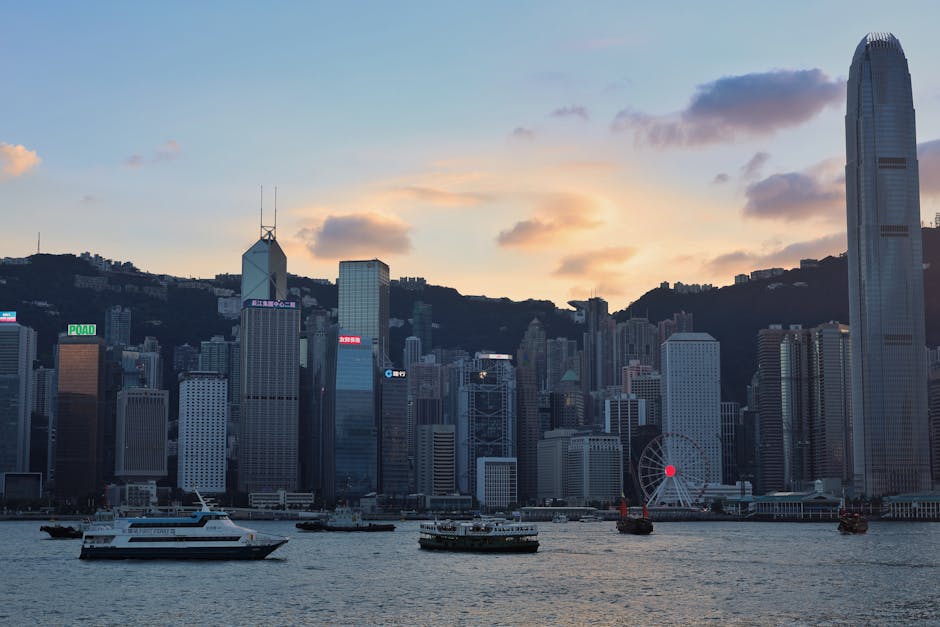
Standing on Victoria Peak at night, watching Hong Kong's skyscrapers illuminate the harbor in a cascade of neon and LED, the city feels like the future imagined by a science fiction writer who'd never heard of urban planning — towers stacked on towers, streets carved through mountains, ferries crossing between islands in a harbor rimmed by the densest concentration of wealth per square meter on earth. Standing at Marina Bay Sands' infinity pool, looking across Singapore's skyline, the city feels like the future imagined by an industrial engineer who was also a landscape architect — every building placed deliberately, every tree maintained intentionally, the entire city-state operating like a precision instrument designed by someone who believed that perfection was achievable if you just planned hard enough.
These aesthetic impressions capture something real about the two cities. Hong Kong is chaos organized by capitalism — frenetic, unequal, vertical, and thrilling in a way that rewards adventurers and overwhelms the order-dependent. Singapore is order organized by governance — safe, efficient, horizontal (relatively), and satisfying in a way that rewards planners and occasionally suffocates free spirits. Both attract massive expat populations. Both offer careers, salaries, and lifestyles unavailable in most other Asian cities. Choosing between them is one of the most consequential decisions an Asia-bound expat can make.
Cost of Living: Both Expensive, Differently
Hong Kong and Singapore consistently rank among the top five most expensive cities globally for expats, but the cost composition differs significantly. Hong Kong's housing costs are the highest in the world — a 500-square-foot (46-square-meter) apartment in Mid-Levels or Central costs HK$25,000–45,000 ($3,200–$5,770) per month. The same-sized apartment in Island East or Kowloon runs HK$15,000–25,000 ($1,920–$3,200). Singapore's equivalents are cheaper: a similar condo in Tanjong Pagar or Orchard costs S$3,000–5,000 ($2,220–$3,700), while outer areas like Jurong or Punggol offer S$2,000–3,000 ($1,480–$2,220). Housing is where Singapore wins the cost comparison definitively.
Food tells the opposite story. Hong Kong's street food and local restaurants remain remarkably cheap — a bowl of wonton noodles at a dai pai dong costs HK$35–50 ($4.50–$6.40), char siu rice is HK$45–60 ($5.77–$7.69), and a dim sum lunch for two at a local restaurant runs HK$150–300 ($19.20–$38.50). Singapore's hawker centers are marginally cheaper (S$3.50–6/$2.59–$4.44 per dish), but the gap is small. Restaurants and bars in both cities charge Western prices; cocktails in Lan Kwai Fong (Hong Kong) or Club Street (Singapore) cost $15–20 either way.
Overall monthly budget for a comfortable single expat life: Hong Kong HK$35,000–55,000 ($4,490–$7,050) depending on housing district. Singapore S$4,000–6,000 ($2,960–$4,440). Singapore is roughly 25–35% cheaper overall, with the savings almost entirely from housing.
Career Opportunities
Hong Kong is the financial capital of Asia. Banking, asset management, insurance, legal services, and corporate treasury functions concentrate here, with compensation packages that compete with London and New York. The city's role as a gateway between mainland China and international markets creates jobs that don't exist elsewhere — roles requiring Mandarin, Cantonese, and English in combinations that only Hong Kong demands.
Singapore diversified earlier and more aggressively into technology, biotech, clean energy, and regional headquarters operations. Tech companies — Google, Meta, ByteDance, Grab, Sea Group — have significant Singapore operations. The government actively attracts high-skilled workers through the ONE Pass and Tech.Pass visa programs. Singapore's political stability and rule-of-law reputation make it the preferred regional headquarters location for multinational companies that previously based in Hong Kong but shifted after 2019–2020 political developments.
Quality of Life: The Deciding Factor
Singapore wins on safety (among the world's lowest crime rates), cleanliness (famously strict littering laws), green spaces (45% of the island is green cover), and family-friendliness (excellent schools, low crime, manageable size). Hong Kong wins on energy (the city never sleeps in ways that Singapore's early-closing restaurants can't match), cultural depth (temples, traditional markets, village life coexisting with hyper-modernity), hiking (Hong Kong's trail network is spectacular and accessible — the Dragon's Back trail, Lion Rock, and Lantau Peak are world-class), and food diversity (Hong Kong's culinary scene is deeper and more varied than Singapore's, though Singapore's hawker culture has no equal).
The lifestyle difference crystallizes in the weekends. A Singapore weekend might involve brunch at a Tiong Bahru cafe, an afternoon at East Coast Park, and dinner at a hawker center — pleasant, predictable, comfortable. A Hong Kong weekend might involve a ferry to an outlying island for hiking, dim sum in a 60-year-old restaurant in Sham Shui Po, an afternoon exploring antique shops in Hollywood Road, and rooftop drinks overlooking the harbor — more varied, more chaotic, more surprising. Whether you prefer pleasant predictability or chaotic surprise determines which city makes you happier, and neither preference is wrong.
The Political Dimension
This conversation is unavoidable. Hong Kong's political landscape changed significantly after 2019, with the implementation of the National Security Law in 2020 affecting press freedom, civil liberties, and the general atmosphere of political expression. Many expats who valued Hong Kong's previous openness have relocated, and the city's expat demographic has shifted accordingly. Singapore has its own political limitations — restrictions on public assembly, media regulations, and a political system dominated by a single party since independence — but these are perceived as stable and predictable rather than changing.
For most expats whose daily lives revolve around work, food, socializing, and exploration rather than political activism, neither city's political environment significantly impacts daily experience. But for those in media, academia, NGOs, or any field where free expression matters professionally, the distinction is relevant and worth researching through current reporting rather than relying on this or any single guide.
The Decision
Choose Hong Kong if you thrive on energy and density, want the highest possible salary in finance or law, love Cantonese food and Chinese culture, enjoy hiking and outdoor activities accessible from a major city, and don't mind paying a premium for a small apartment. Choose Singapore if you prioritize safety and cleanliness, want career diversity across tech, finance, and manufacturing, prefer tropical consistency over seasonal variation, value green spaces and planned infrastructure, and want a lower cost of living (relatively — it's still expensive). Both cities are extraordinary places to live. The right choice is the one that matches who you are, not who you think you should be.