Expat Guide to Transportation in Asian Cities: Cards, Apps, and Tricks
In Tokyo, you tap a card. In Bangkok, you use an app. In Hanoi, you close your eyes and cross the street. Here's how transportation actually works across Asia.
The First Commute Sets the Tone
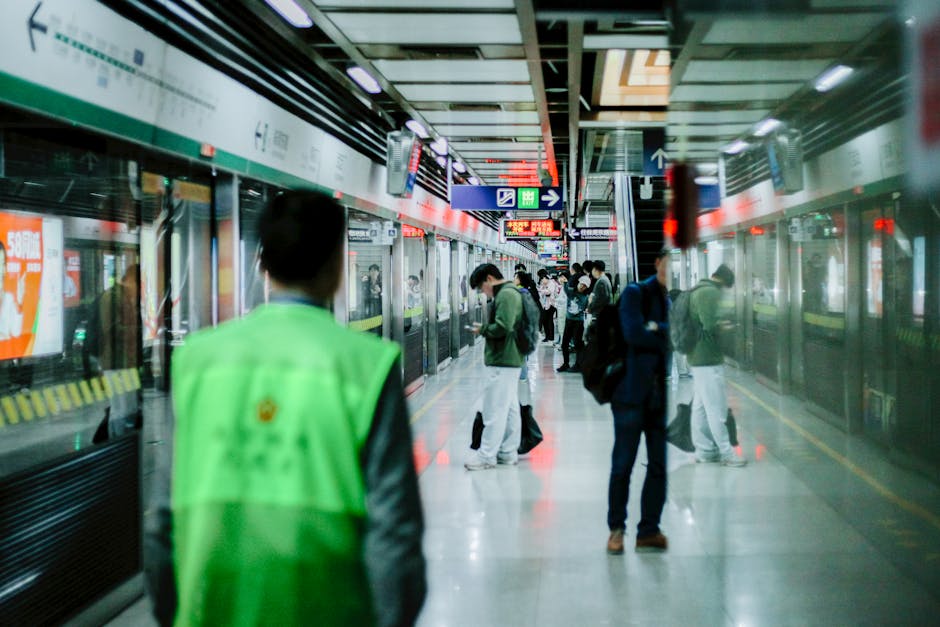
My introduction to Asian public transit was a rush-hour train in Tokyo where uniformed station staff in white gloves physically pushed passengers into the car to close the doors. The train was already at 180% capacity — a metric that exists because Japanese rail companies actually calculate this — and my face was pressed against the glass door while a stranger's briefcase jabbed my lower back. I arrived at my destination sweaty, disoriented, and convinced that Tokyo's vaunted transit system was a cruel joke. Six months later, I was the one silently judging tourists who didn't know to stand on the left side of the escalator. Transportation in Asian cities ranges from world-class to anarchic, and mastering your city's system is the single biggest quality-of-life upgrade available to new expats. Here's the practical guide to getting around the cities you're most likely to live in.
Tokyo: The Gold Standard (With Caveats)
Tokyo's rail network carries over 13 million passengers daily across 280+ stations operated by multiple companies — JR East, Tokyo Metro, Toei Subway, and various private railways like Keio, Odakyu, and Tokyu. Understanding that these are separate companies with separate fare structures is critical: a trip that crosses from JR to Tokyo Metro to Toei involves three separate fares unless you have a commuter pass (teiki) that covers the full route. Without a pass, a cross-city commute can cost ¥500–¥800 ($3.30–$5.30) each way.
Get a Suica or PASMO IC card immediately — they work on all trains, buses, and at convenience stores, vending machines, and many restaurants. Both cards are functionally identical; Suica is issued by JR and PASMO by private railways. Apple Pay and Google Pay now support virtual Suica, which means your phone becomes your transit card. Load ¥3,000–¥5,000 ($20–$33) initially and top up at any station machine.
If you have a regular commute, a teiki (commuter pass) saves substantial money. A monthly pass covering a specific route costs roughly 60% of what you'd pay buying individual tickets daily. Your employer may cover commuter pass costs — this is standard practice in Japan and you should ask during salary negotiation. The pass also allows unlimited rides between any stations on the covered route, not just your origin and destination, which means choosing a route that passes through useful commercial areas (Shinjuku, Shibuya, Ikebukuro) effectively gives you free transportation to those districts.
Timing and Etiquette
Rush hour in Tokyo means 7:30–9:30 AM and 5:30–8 PM. Trains during these windows are genuinely unpleasant — standing-room-only is the best-case scenario, and physical contact with strangers is unavoidable. If your work schedule allows flexibility, traveling before 7:30 AM or after 9:30 AM transforms the experience from sardine can to merely crowded. Many Japanese companies have adopted flextime partially in response to commuter congestion. Women-only cars are available during rush hour on most major lines — look for the pink signage on the platform.
Seoul: Fast, Cheap, and Connected
Seoul's metro is the best value public transit system in Asia. The network covers 23 lines and 700+ stations, reaching virtually every corner of the greater Seoul metropolitan area. A single ride costs ₩1,400 ($1.04) for the first 10 kilometers and ₩100 ($0.07) per additional 5 kilometers — you can cross the entire city for under ₩2,000 ($1.48). The T-money card (available at any convenience store for ₩2,500/$1.85) works on all metro lines, buses, and taxis.
Buses in Seoul fill the gaps between metro stations and are actually the preferred transportation method for many locals. The bus system uses a color-coded route scheme: blue (trunk routes across the city), green (feeder routes to metro stations), red (express routes to suburbs), and yellow (circular routes within downtown). Google Maps covers Seoul's bus network perfectly — enter your destination and it'll show you the optimal combination of metro and bus connections. KakaoMap (카카오맵) is even better for Korean-language route planning and includes real-time bus arrival information that's accurate to the minute.
Taxis in Seoul are clean, metered, and reasonably priced. A base fare of ₩4,800 ($3.56) covers the first 1.6 kilometers, with ₩100 ($0.07) per 131 meters thereafter. Late-night surcharges (20%) apply from midnight to 4 AM. Kakao Taxi (through the KakaoTalk app) functions like Uber and is the easiest way to hail a cab, especially in areas where street hailing is difficult. The app supports English and provides fare estimates before booking.
Bangkok: The Multi-Modal Puzzle
Bangkok's transportation system is a work in progress that requires combining multiple modes to get anywhere efficiently. The BTS Skytrain (elevated) and MRT (underground) cover major commercial corridors but leave vast areas of the city unreached. A single BTS ride costs ฿16–59 ($0.45–$1.65) depending on distance; MRT rides cost ฿17–43 ($0.48–$1.20). The two systems use separate ticketing — a BTS Rabbit card doesn't work on the MRT, and vice versa. This is a known frustration that the government keeps promising to fix and hasn't.
For the BTS, get a Rabbit card (฿100/$2.80 deposit plus your initial load). For the MRT, get a stored-value token. For everything else, use Grab. Bangkok taxis are metered and start at ฿35 ($0.98) but finding one that will use the meter (instead of quoting a flat fare) during rush hour is an exercise in persistence. Grab solves this — the price is fixed before booking, the route is tracked, and the driver has a rating incentive to behave professionally. GrabBike is the real transportation hack in Bangkok: a motorcycle taxi that weaves through traffic, costs ฿20–80 ($0.56–$2.24) for most trips, and gets you there in a fraction of the time a car would take.
The Chao Phraya Express Boat is an underappreciated transportation option for anyone living or working near the river. The orange-flag boat service runs from Nonthaburi to Wat Rajsingkorn for ฿15 ($0.42) per trip, with stops near major destinations including Khao San Road, the Grand Palace, and Saphan Taksin (which connects to the BTS). It's faster than road transportation during rush hour and infinitely more scenic.
Singapore: Small City, Perfect System
Singapore's public transit is what happens when an efficient government with unlimited resources decides to solve urban transportation definitively. The MRT network covers the entire island with six lines and 130+ stations. A single ride costs S$0.92–$2.20 ($0.68–$1.63) with an EZ-Link or NETS FlashPay card. Buses fill every gap the MRT misses, and the transfer system lets you switch between bus and MRT within 45 minutes for a single fare. Get an EZ-Link card at any MRT station (S$5/$3.70 deposit) or use SimplyGo with a contactless bank card.
Ride-hailing in Singapore uses Grab (dominant), Gojek (competitor with sometimes lower prices), and ComfortDelGro's CDG Zig app for traditional taxis. Surge pricing during rain (which happens almost daily) and rush hours can make rides expensive — a 10-kilometer Grab ride that normally costs S$12–15 ($8.90–$11.10) can spike to S$25–35 ($18.50–$25.90) during a thunderstorm. Check all three apps and compare prices before booking.
Hanoi and HCMC: Controlled Chaos
Vietnam's major cities run on motorbikes. There are 5.8 million registered motorbikes in Hanoi alone, and crossing the street involves stepping into the flow and walking steadily while the bikes part around you like water around a stone. This sounds insane and it works, as long as you maintain a constant speed and direction. Stopping or running is what causes accidents. After about two weeks, you'll cross Vietnamese streets without thinking, and you'll wonder how you ever lived in a city with traffic lights.
Grab is essential in both cities. GrabBike costs VND10,000–30,000 ($0.40–$1.20) for most urban trips and is the fastest way to get anywhere. GrabCar is available for longer trips or when you have luggage. Hanoi's first metro line (Line 2A, Cat Linh–Ha Dong) opened in 2021 and a second line is under construction. HCMC's Metro Line 1 opened in late 2024, connecting Ben Thanh Market to Suoi Tien in the eastern suburbs. Both are modern, air-conditioned, and cheap, but the limited coverage means they supplement rather than replace motorbike taxis for most trips.
Universal Tips
Download offline maps before you need them. Google Maps works well in most Asian countries but is unreliable or blocked in China (use Amap/Gaode). Save your home address, workplace, and nearest hospital in your maps app in the local language — showing a taxi driver an address in characters they can read prevents the "where is that?" conversation in a language you might not share. Keep small bills for taxis and buses; large denomination notes create change problems everywhere. And learn one phrase in the local language: "please use the meter." In Thai: "pert meter duay khrap/ka." In Vietnamese: "bật đồng hồ đi." In Japanese, you won't need it — every taxi in Japan uses the meter without being asked, which is yet another reason Japan's transportation system sets the standard.