Working in a Korean Office: Surviving the Hierarchy
Your Korean boss just asked you to work on Saturday. Again. And everyone in the office is still here at 9 PM on a Wednesday. Welcome to Korean corporate culture.
The First Day Tells You Everything
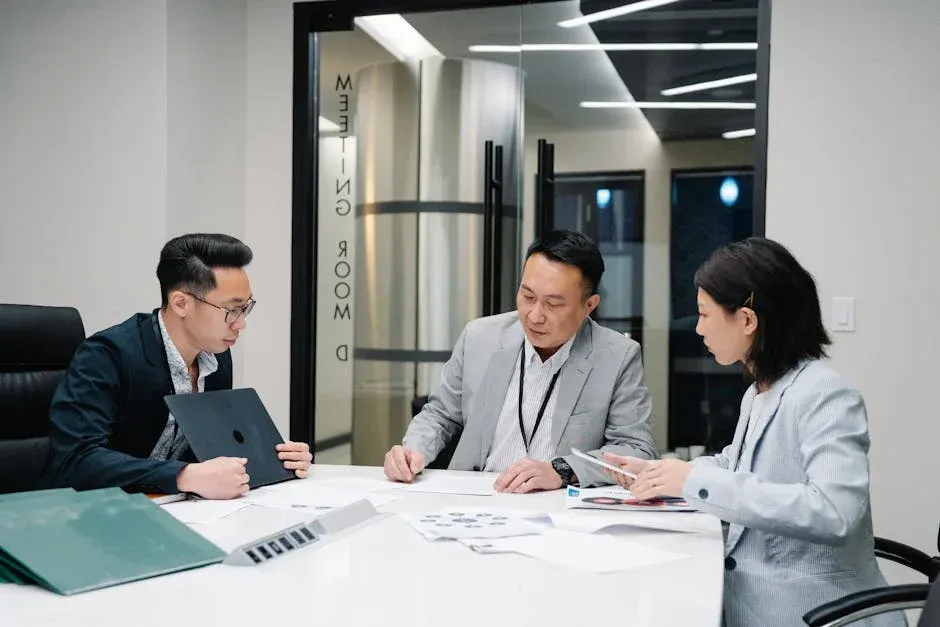
On my first day at a mid-sized Korean tech company in Gangnam, three things happened that would have been bizarre in any Western workplace. First, during introductions, every single colleague told me their exact age and year of university graduation before anything else — before their role, their department, or even their name in some cases. Second, my manager physically arranged where I would sit based on my position in the team hierarchy, placing me at the desk furthest from the window (a junior position signal I didn't understand until weeks later). Third, at 6:30 PM, when the workday officially ended, not a single person stood up. Everyone watched the team leader. When he stayed, they stayed. I looked around, confused, and the colleague next to me whispered in English: "We leave when he leaves." He left at 9:15 PM.
Korean corporate culture operates on principles that are invisible to outsiders but iron-clad to insiders. Understanding these principles won't make you love the system — plenty of young Koreans don't love it either — but it will keep you from making career-ending mistakes and help you extract the genuine benefits that exist within the structure. Because despite everything I'm about to describe, Korean teams can be extraordinarily effective, loyal, and supportive once you've earned your place.
The Hierarchy: It's Not Just Titles
Every Korean company has a formal ranking system, and everyone knows exactly where they stand. The standard progression at most companies runs: sawon (사원, staff member) → daeri (대리, assistant manager) → gwajang (과장, manager) → chajang (차장, deputy general manager) → bujang (부장, general manager) → isa (이사, director) → sangmu (상무, managing director) → jeonmu (전무, executive managing director) → sajang (사장, CEO). These aren't just labels; they determine how people address you, how you address them, and the texture of every interaction. Calling a gwajang by their first name is unthinkable. Calling a bujang "Mr. Kim" instead of "Kim Bujang-nim" signals that you don't understand — or worse, don't respect — the system.
Age layers on top of corporate rank to create a two-axis hierarchy that can produce awkward situations. A 45-year-old daeri (assistant manager) who was promoted slowly outranks a 30-year-old gwajang (manager) by age but not by title. In these situations, both parties must negotiate a complex social dance where the younger person shows respect for the elder's age while the elder defers to the younger person's authority on work matters. As a foreigner, you'll mostly be exempt from the subtlest aspects of this — people will forgive your hierarchy mistakes as cultural ignorance. But they'll notice, and repeatedly failing to observe basic protocols will mark you as someone who doesn't care about Korean culture, which is a relationship killer.
Working Hours: The Official Lie
Korean labor law mandates a 52-hour maximum workweek (40 regular hours plus 12 overtime). In practice, many Korean employees work 55–65 hours per week, with the difference hidden through various mechanisms: not logging overtime, attending "voluntary" company events that function as work, and the cultural expectation that leaving before your superior signals laziness rather than efficiency. The 2018 reform that reduced the legal maximum from 68 hours was celebrated as a major victory for work-life balance, which tells you everything about the baseline.
As a foreign employee, your relationship with overtime will depend on your company's culture and your specific manager. At Korean branches of multinational companies (Samsung, LG, Hyundai, SK), the culture is corporate-Korean hybrid, and foreign employees are generally expected to work Korean hours. At startups and smaller companies, the range is enormous — some are worse than the chaebols, others genuinely embrace flexible schedules. At English teaching positions (hagwons), hours are long but predictable: typically 2 PM to 10 PM, Monday through Friday, with Saturday classes at some schools.
The Art of Being Present
Face time — being physically visible in the office — matters more in Korea than in almost any other developed economy. Working efficiently and leaving at 6 PM marks you as uncommitted, even if you accomplished more than the colleague who stayed until midnight scrolling Naver. This is changing among younger Korean companies, and the pandemic accelerated remote work acceptance, but the bias toward presence remains strong at traditional companies. If you're at a company where face time matters, develop strategies: use the late hours for professional development, online courses, or personal projects after your actual work is done. Some expats treat the mandatory late evenings as "free time with a desk" and use them productively without burning out on actual work.
Hoesik: The Mandatory Fun
Company dinners (hoesik) happen regularly — weekly at some companies, monthly at others, and always to celebrate team milestones, welcome new members, or bid farewell to departing ones. A typical hoesik starts at a Korean barbecue restaurant around 7 PM, moves to a second location (usually a bar) around 9 PM, and sometimes extends to a third round (noraebang — karaoke) that can last until midnight or later. The company often covers the bill for the first round, and the team leader covers subsequent rounds, which is why being promoted to team leader is both an honor and a financial burden.
The social dynamics at hoesik are crucial. Juniors pour drinks for seniors, using both hands and turning their head away while drinking if their glass was filled by someone older. The seating arrangement matters — the team leader sits at the head, and the newest member sits closest to the door (symbolically ready to fetch things). Conversation loosens dramatically by the second round, and this is when real information flows: who's unhappy, what the company's actual strategy is (versus the official one), and which projects are secretly struggling. Korean professionals use hoesik as a pressure release valve for a work culture that suppresses honest communication during office hours, which means these dinners serve a genuine organizational function even when they feel like torture.
Communication: What's Said vs. What's Meant
Direct communication — the "just tell me what you think" approach that Western workplaces celebrate — is a liability in Korean corporate culture. When your Korean manager says "that's an interesting idea," they often mean "that idea has problems but I won't embarrass you by saying so in front of others." When they say "we should think about this more," they frequently mean "no." When they say "it might be a bit difficult," they mean "absolutely not." Learning to read these coded messages is essential, and it requires paying attention to context, tone, and body language rather than literal words.
Email communication follows similar patterns. Korean business emails are longer and more formal than Western equivalents, with elaborate openings and closings that acknowledge the recipient's status and the writer's relative position. Jumping straight to "Hey, can you send me the file?" in an email to a superior is jarring. The expected format opens with a greeting that references the recipient's title, acknowledges the imposition of making a request, states the request with appropriate hedging, and closes with thanks for their time and effort. It feels excessive to Western eyes but signals respect and professionalism in Korean context.
What Korean Work Culture Does Right
For all its pressures, Korean work culture produces some things that Western workplaces lack. Team loyalty is genuine and deep — Korean colleagues will advocate for each other, cover for mistakes, and celebrate successes with an intensity that feels like family. The hoesik culture, despite its excesses, creates bonds that make teams resilient under pressure. The respect for seniority ensures that institutional knowledge is valued and experienced voices are heard, which prevents the "move fast and break things" recklessness that plagues some Western tech cultures.
Korean companies also invest heavily in their employees. Training programs are common and often generous — language courses, technical certifications, leadership development. Company-provided housing allowances, transportation subsidies, and generous vacation policies (though using all your vacation days might raise eyebrows) are standard at larger firms. And the sense of collective purpose — the feeling that your team is working toward something together, not just collecting individual paychecks — is something many expats miss profoundly after leaving Korea.
The trick to surviving and even thriving in Korean corporate culture is treating it as an anthropological experience rather than a moral test. You don't have to agree that staying until your boss leaves is a good system. You just have to understand that it is the system, work within it with good humor, and appreciate the genuine warmth and loyalty that Korean colleagues offer once you've shown you're willing to play by their rules. The first six months are the hardest. After that, you might find yourself actually enjoying the noraebang.