The Social Lubricant of East Asia
The first time my Korean colleague poured me a shot of soju using both hands, turned his body 90 degrees away from me, and drank while covering his glass with his free hand, I thought he was performing some kind of elaborate joke. He wasn't. In Korea, how you drink is as socially significant as what you drink, and every element — who pours, who receives, which direction you face, which hand holds the glass — communicates respect, hierarchy, and relationship status. Drinking in Asia is not the universal language of casual sociability that Westerners often assume. It's a complex cultural practice with rules that vary dramatically by country, and breaking those rules can damage relationships in ways that feel disproportionate to the act of holding a glass incorrectly.
South Korea: Soju and Social Hierarchy
Korean drinking culture is the most ritualized in Asia and possibly the world. The central rules: never pour your own drink — someone else does it for you, and you do it for them. When an elder or superior pours for you, receive the glass with both hands. When drinking in the presence of someone senior (by age or rank), turn your body slightly away and cover your glass with your hand while drinking — this demonstrates respect by not drinking "in their face." When an elder's glass is empty, refill it before they notice. These rules apply at every social drinking occasion, from casual Friday nights to formal company dinners.
Soju (소주) is Korea's national spirit — a clear liquor at 16–20% ABV that costs ₩5,000–6,000 ($3.70–$4.44) per bottle at a restaurant. It's served in small glasses and consumed as shots, typically accompanying food. Beer (maekju) is also popular, and the combination of soju and beer — somaek (소맥) — is the standard Korean drinking cocktail. The mixing ratio is personal, but a common method is to fill a beer glass two-thirds with beer, then drop a shot glass of soju into it. The resulting mixture is deceptively drinkable and efficiently intoxicating.
The phrase "one-shot" (원샷) means "drink the entire glass in one go" and is used as a toast. Compliance is expected for the first round; after that, you can sip at your own pace without social penalty. If you genuinely don't drink, state this clearly at the beginning of the evening: "Jeo-neun sul-eul mot masyo" (저는 술을 못 마셔요 — I can't drink alcohol). Most Koreans will accept this after initial surprise, though you may need to repeat it firmly if the group's energy level rises as the evening progresses.
Japan: The Nomikai System
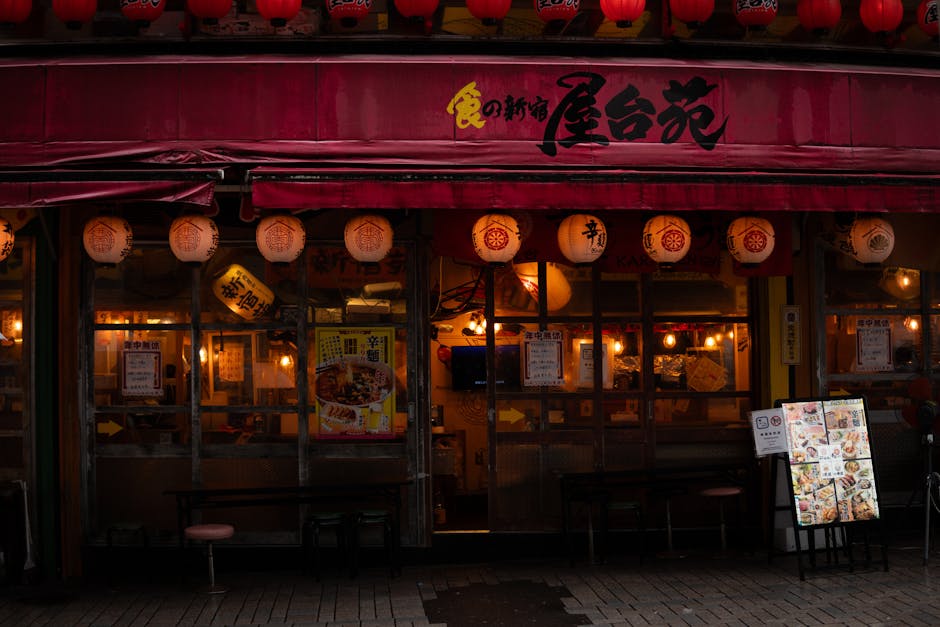
Japanese drinking culture operates through the nomikai (飲み会, drinking gathering) — organized social events at izakayas (pub-restaurants) that range from casual friend groups to mandatory work occasions. The typical nomikai follows a script: arrival, ordering the first round (usually beer — "toriaezu biiru" means "beer for now" and is the default first order), a toast (kanpai!), shared food platters, increasingly honest conversation, and departure after 2–3 hours. The all-you-can-drink (nomihodai) plan — ¥2,000–3,000 ($13–$20) for 90–120 minutes of unlimited drinks — is standard at most izakayas and represents extraordinary value for social drinking.
Japanese drinking etiquette is less rigidly hierarchical than Korean but has its own rules. Never fill your own glass — pour for others and they'll reciprocate. The person who organizes the nomikai usually says "kanpai" to start; drinking before the toast is noticed. Beer is the universal first drink; switching to shochu (a distilled spirit), sake, or whisky highballs (highball culture is massive in Japan) happens after the first round. Refusing to drink is more socially accepted in Japan than Korea — "watashi wa nomimasen" (I don't drink) is respected without excessive pressure in most situations.
The post-nomikai progression — first venue (izakaya), second venue (usually a bar), third venue (karaoke or ramen shop) — is called hashigo (はしご, "laddering"). Each venue represents a deeper level of social bonding. Leaving after the first venue is acceptable; staying through the third signals strong social commitment and builds relationships that transfer to professional contexts. This is why Japanese work culture is inseparable from drinking culture — the bonds formed during third-venue karaoke sessions directly influence who gets promoted, who gets the good projects, and who's trusted with important information.
Thailand: Communal and Ice-Cold
Thai drinking culture is communal and relaxed. The standard setup at a Thai restaurant or bar is a bottle of whisky (usually Sangsom or Hong Thong, Thai rum-whiskies), a bucket of ice, soda water, and Coke — the table mixes their own drinks throughout the evening. This "set" (เซ็ท) costs ฿500–800 ($14–$22) at a local restaurant and serves 3–4 people, making it one of the cheapest group drinking options in Asia. Beer — Chang, Singha, and Leo are the major brands — is served with ice, which initially horrifies beer purists and eventually converts them because a cold beer in Bangkok's 35°C heat is improved by not becoming warm within four minutes.
There's no complex pouring etiquette — anyone pours for anyone. The social expectation is contribution: if someone else bought the bottle, you buy the next one, or you cover the food bill. Thai drinking sessions revolve around food as much as alcohol — platters of som tam (papaya salad), grilled meats, and seafood arrive continuously. Drinking without eating is uncommon and slightly odd in Thai culture. The food-drink integration means Thai drinking sessions are longer, slower, and less focused on getting drunk than Korean or Japanese equivalents, which is a feature.
Muslim-Majority Countries: Malaysia and Indonesia
Malaysia and Indonesia have Muslim-majority populations with complex relationships to alcohol. In Malaysia, alcohol is legally available to non-Muslims and is sold in Chinese restaurants, Indian restaurants, Western-style bars, and non-halal sections of supermarkets. Prices are high by Asian standards due to sin taxes — a beer at a bar costs RM18–25 ($3.80–$5.30), and a bottle of wine at a restaurant runs RM100–200 ($21–$43). Drinking in public is legal but contextually inappropriate in Malay-majority neighborhoods and during Islamic holidays. The expat and non-Muslim Malaysian social scenes include robust bar cultures in KL's Changkat Bukit Bintang, TTDI, and Bangsar neighborhoods.
Indonesia is more varied. Bali has a fully open drinking culture — bars, beach clubs, and nightclubs operate without restriction, and alcohol is affordable at local warungs (RM15,000–30,000/$0.95–$1.90 for a beer). Java is more conservative, and alcohol availability outside Jakarta, Surabaya, and tourist areas is limited. In 2015, Indonesia banned alcohol sales in convenience stores and small shops (minimarkets), though enforcement is inconsistent. For expats in Java outside major cities, purchasing alcohol may require trips to specific stores or international supermarkets. Aceh province on Sumatra enforces sharia law and prohibits alcohol entirely.
China: Ganbei and Baijiu
Chinese business drinking centers on baijiu (白酒), a grain spirit at 40–60% ABV with a flavor that most Westerners find intensely challenging — it's been described as "sorghum filtered through a burning tire," which is unfair but not entirely inaccurate. Ganbei (干杯, "dry glass") means emptying your glass completely, and it's used as a toast during business dinners where refusing to ganbei can signal disrespect. The culture of competitive drinking during business banquets is real, particularly in northern China and at state-owned enterprise events. Strategies for survival: pace yourself by toasting with beer instead of baijiu (some tables allow this), claim a medical condition if necessary, or learn the phrase "sui yi" (随意, "at will") which signals you'll drink at your own pace rather than matching ganbei for ganbei.
The Non-Drinker's Playbook
If you don't drink alcohol, living in Asia is entirely possible but requires proactive communication. In Korea and Japan, where drinking is most socially integrated, establish your non-drinking status early and consistently. Offer to drive (valued in both cultures), order non-alcoholic alternatives enthusiastically rather than apologetically, and participate in the social aspects of drinking events — the conversation, the food, the karaoke — without the alcohol. The pressure to drink exists, but it diminishes once your social circle accepts your boundary. In Thailand, the Philippines, and Southeast Asia generally, non-drinking is accepted more easily because the drinking culture is less ritualized and more optional.
The underlying principle across all Asian drinking cultures is this: the alcohol is a vehicle for social bonding, not the destination. Whether you're drinking soju in Seoul, sake in Tokyo, or Coke in Bangkok, the real purpose is building relationships through shared experience. Understanding this transforms drinking situations from cultural minefields into opportunities for exactly the kind of genuine connection that makes living in Asia worthwhile.