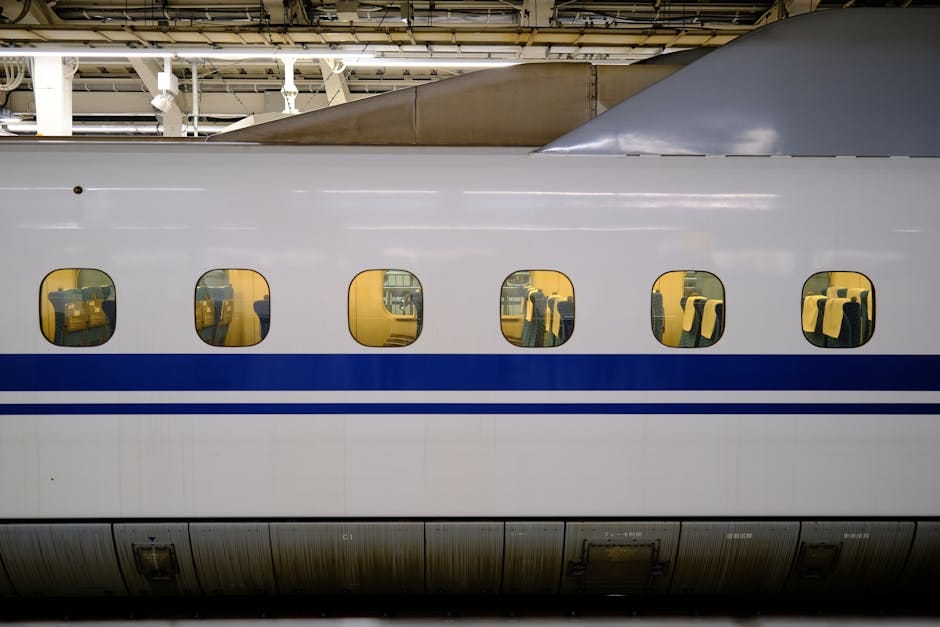
Why Trains in Asia Are Different
In much of the Western world, trains are the transportation option you choose when you can't afford to fly or can't be bothered to drive. In Asia, trains are often the superior choice — faster than flying when you count airport time, more comfortable than any bus, and offering views that no other transportation mode provides. Japan's shinkansen covers Tokyo to Osaka (515 km) in 2 hours 15 minutes, city center to city center, with no security lines, no baggage restrictions, and legroom that would make a business-class airline seat feel cramped. Thailand's sleeper trains traverse the country overnight, saving you a hotel night while delivering you to a new city by morning. China's high-speed rail network is the largest on earth and growing. If you live in Asia and haven't explored by train, you're missing one of the continent's greatest pleasures.
Japan: The Shinkansen Experience
The shinkansen (bullet train) isn't just transportation — it's an engineering achievement that operates with an average delay of 54 seconds per year. The Tokaido Shinkansen from Tokyo to Kyoto (2 hours 15 minutes, ¥13,320/$89) is the route every expat in Japan should ride first. Book a window seat on the right side (seats D and E in standard class) for the best view of Mount Fuji, visible on clear days approximately 45 minutes after departing Tokyo.
The Japan Rail Pass (JR Pass) offers unlimited travel on most JR trains (including shinkansen) for 7, 14, or 21 days. A 7-day pass costs ¥50,000 ($333) for standard class and pays for itself with just one Tokyo-Kyoto round trip (¥26,640) and a day trip to Hakone or Kamakura. For residents of Japan, a similar savings is available through regional passes — the JR East Pass (Nagano and Niigata area), JR Kansai Pass, and Seishun 18 Kippu (¥12,050 for 5 days of unlimited local train travel, available during school vacation periods).
Beyond the shinkansen, Japan's local train lines offer some of Asia's most scenic rides. The Sagano Scenic Railway through Kyoto's Arashiyama bamboo groves, the Enoshima Electric Railway along Kamakura's coast, and the Kurobe Gorge Railway through the Japanese Alps are all affordable day trips from major cities that showcase Japan's landscape in ways that highways and airports can't.
Thailand: The Overnight Sleeper
The Bangkok-to-Chiang Mai sleeper train (12–14 hours, departing Bangkok's Hua Lamphong Station at 6 PM and arriving around 7 AM) is a classic Asian rail experience. Second-class sleeper berths cost ฿791–881 ($22–$25) for lower/upper bunks with air conditioning, sheets, and a pillow. The train rocks gently through the night, the attendant converts your seat into a bed at around 8 PM, and you wake up to the mountains of northern Thailand rolling past your window. It's not fast — a flight takes one hour — but it's an experience, and it saves a hotel night.
The Death Railway route from Bangkok to Nam Tok (via Kanchanaburi) follows the WWII-era railway over the River Kwai bridge and along cliff edges that produce views simultaneously spectacular and historically sobering. The full route takes about 5 hours and costs ฿100 ($2.80). Combine it with a stop in Kanchanaburi for the war museums and cemeteries, and it's one of the most powerful day trips available from Bangkok.
China: The High-Speed Revolution
China's high-speed rail network covers 42,000+ km and connects virtually every major city. The Beijing-Shanghai route (1,318 km in 4 hours 18 minutes) is the flagship line, with second-class seats at CNY553 ($76) — roughly the same time and cost as flying when you factor in airport commute and security. The Shanghai-Hangzhou route (45 minutes, CNY73/$10) makes West Lake one of the easiest day trips from any major city. Tickets are available through Trip.com or 12306.cn (China's railway booking site, available in English).
South Korea: The KTX
Korea's KTX (Korea Train Express) connects Seoul to Busan (325 km) in 2 hours 15 minutes for ₩59,800 ($44). This is the quintessential Korean weekend trip — depart Seoul Station Friday evening, spend Saturday exploring Busan's beaches and seafood markets, return Sunday afternoon. The KTX also connects Seoul to Gangneung on the east coast (1 hour 40 minutes, ₩27,600/$20), making the surfing beaches and the famous Gangneung coffee shops an easy day trip. Book through the Korail website (letskorail.com) or the Korail Talk app.
Southeast Asia: The Emerging Network
Vietnam's Reunification Express runs the entire length of the country from Hanoi to Ho Chi Minh City (1,726 km, 30+ hours). The full journey is a commitment, but shorter segments are excellent: Hue to Da Nang (2.5 hours, VND70,000/$2.80 for hard seat) crosses the Hai Van Pass with ocean views that rival any train route in the world. Soft sleeper berths for overnight segments cost VND600,000–900,000 ($24–$36).
Malaysia's ETS (Electric Train Service) connects KL to Penang in 4 hours for RM59–79 ($12.50–$16.80). It's comfortable, punctual, and deposits you in central Georgetown instead of Penang's distant airport. The Singapore-KL route lacks a direct train since the old service was terminated, but the KL-JB Shuttle combined with a walk across the causeway to Singapore provides a budget alternative to flying.
Practical Tips
Book trains in advance during peak travel periods — Golden Week in Japan (late April–early May), Chinese New Year (January–February) across the region, and Songkran in Thailand (mid-April) sell out train capacity weeks ahead. For Japan, the SmartEX app allows English-language shinkansen booking with a credit card. For China, Trip.com is the most foreigner-friendly booking platform. For Thailand, use 12Go.Asia. For Korea, the Korail website works well in English.
Bring food. Japanese station bento (ekiben) are an art form — each station sells regional specialties that transform the journey into a culinary tour. Thai trains have dining cars serving decent food at reasonable prices. Chinese high-speed trains have carts with instant noodles, snacks, and hot water. Korean KTX has a limited snack service but convenience stores in Seoul Station offer excellent pre-trip provisions. The universal Asian train tip: bring more water than you think you'll need, and use the bathroom before departure if you're traveling on older rolling stock where onboard facilities may be basic.