Why You're Going to Be Naked
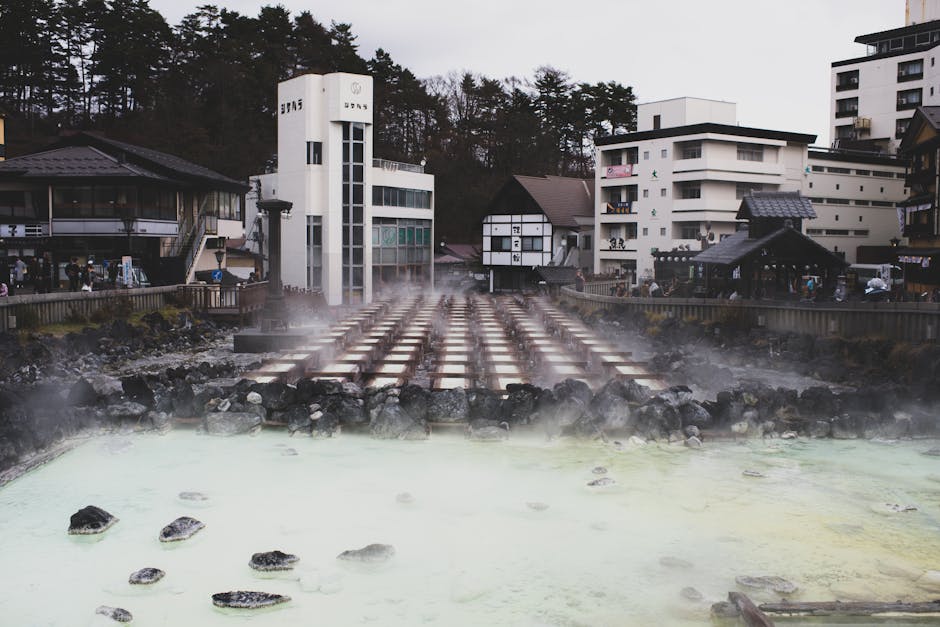
The first time I entered a Japanese onsen (hot spring bath), every instinct in my American body screamed that something was wrong. I was in a tiled room with about fifteen other men, all completely naked, sitting on low stools washing themselves with handheld showerheads before entering a large communal pool of steaming mineral water. No swimsuits. No towels around waists. No privacy barriers. Just a lot of naked people acting completely natural about it, which somehow made me feel more self-conscious, not less. I considered retreating to my locker room but decided that flying 6,000 miles to Japan and being defeated by a bathing facility was more embarrassing than the nudity. So I washed, entered the pool, and experienced something that I can only describe as a full-body reset — the mineral-rich water at 42°C, the steam rising into the cool air, the complete absence of phones and screens and deadlines. Ten minutes in, I'd forgotten I was naked. Twenty minutes in, I understood why Japanese people have been doing this for a thousand years.
The Rules (Non-Negotiable)
Wash before entering the bath. This is the cardinal rule. Every onsen has a washing area with low stools, handheld showerheads, shampoo, conditioner, and body soap. Sit on the stool, wash your entire body thoroughly, rinse completely, and only then enter the bathing pool. Entering the pool without washing first is the onsen equivalent of — well, there is no Western equivalent, because Western bathing culture doesn't have a communal pool that everyone shares. But the violation is severe enough that other bathers will stare, staff may intervene, and your reputation as a considerate human being is permanently compromised in that facility.
No towels in the water. The small hand towel (tenugui) provided or brought from home is for washing and modesty during transit between areas. Fold it and place it on your head or on the edge of the pool while bathing. Never let it touch the water — the towel carries soap residue and bacteria that would contaminate the shared pool.
No swimming, splashing, or loud conversation. Onsen are meditation spaces, not swimming pools. Sit quietly in the water, move slowly, and keep conversation to a low murmur. Japanese onsen regulars are there for contemplation and relaxation, and the atmosphere should reflect that. Children are welcome at most onsen but are expected to follow the same quiet behavior standards, which teaches them something about peaceful public spaces.
Tie long hair up. Hair should not touch the water for the same hygiene reasons as the towel rule. Bring a hair tie if your hair is longer than shoulder length.
No photos. This should be obvious in a room full of naked people, but: no phones, no cameras, no photography of any kind in the bathing areas. Many onsen have signs specifically prohibiting this, and violation will result in immediate ejection.
The Tattoo Issue
Many onsen and sento (public bathhouses) in Japan prohibit entry for people with tattoos. This policy originated from the association between tattoos and yakuza (Japanese organized crime) and persists despite the obvious reality that most foreign visitors with tattoos are not gangsters. The prohibition ranges from strict (any visible tattoo, regardless of size or content, results in denial of entry) to flexible (small tattoos can be covered with waterproof bandages, which some onsen sell at the front desk).
Navigating this as a tattooed foreigner: call ahead or check the facility's website for their specific policy. Tattoo-friendly onsen exist and are becoming more common, particularly in tourist-heavy areas — the Tattoo Friendly website (tattoofriendly.jp) maintains a searchable database. Private onsen (kashikiri) — where you book a private room with its own bath — are available at many ryokan (traditional inns) and onsen facilities for ¥2,000–¥5,000 ($13–$33) per hour. These bypass the communal bathing issue entirely. Some tattoo-unfriendly onsen will look the other way for clearly non-Japanese-style tattoos on foreign visitors, but this is inconsistent and you shouldn't count on it.
Types of Bathing Facilities
Onsen (温泉): Natural hot spring water, mineral-rich, with specific chemical compositions that supposedly offer health benefits (sulphur for skin, iron for circulation, etc.). Found primarily outside major cities at volcanic hot spring resorts. Famous onsen towns include Hakone, Beppu, Kusatsu, Noboribetsu, and Kinosaki. Water temperatures range from 38°C (lukewarm) to 45°C (painfully hot). Entry fees are ¥500–¥2,000 ($3.30–$13.40).
Sento (銭湯): Public bathhouses using heated tap water (not natural springs). Found in every Japanese neighborhood, particularly in older residential areas. Sento are the everyday bathing facilities of Japan — historically used when homes didn't have bathtubs, now maintained as community spaces and affordable relaxation. Entry fee: ¥500–¥700 ($3.30–$4.70). Less touristy than onsen, more authentically local.
Super sento (スーパー銭湯): Large commercial bathing complexes with multiple pools at different temperatures, saunas, cold plunge baths, restaurants, manga libraries, napping rooms, and sometimes entertainment. Raku Spa in Tokyo, Spa World in Osaka, and Oedo Onsen Monogatari (multiple locations) are popular super sento. Entry fees are ¥1,500–¥3,000 ($10–$20) for unlimited time, making them excellent value for a full afternoon or evening of relaxation.
The Practical Sequence
Here's the exact sequence of events from arrival to departure, so you can walk in without anxiety:
1. Remove shoes at the entrance and place them in a shoe locker (coin-operated, usually ¥100 that's returned when you retrieve your shoes). 2. Pay at the front desk and receive a towel set if included (many onsen provide a large bath towel and small hand towel; some charge extra). 3. Enter the appropriate changing room (男/otoko = men; 女/onna = women). 4. Remove all clothing and place in a locker. Take only your small hand towel into the bathing area. 5. Wash thoroughly at a washing station. 6. Enter the pool of your choice (if multiple are available). 7. Soak for 10–20 minutes. If you feel dizzy, exit the pool and sit on the edge to cool down. 8. Repeat washing and soaking as desired. 9. Return to the changing room, dry off, and dress.
The first time feels awkward. The second time feels natural. The third time, you wonder how you ever lived without it. Onsen culture is one of the genuine gifts of living in Japan — a practice that dissolves stress, builds community (there's a reason Japanese business relationships are often cemented over shared bathing), and connects you to a tradition that dates back over a thousand years. Every foreigner who visits an onsen nervously and leaves relaxed says the same thing: "I should have done this sooner." So do it sooner.