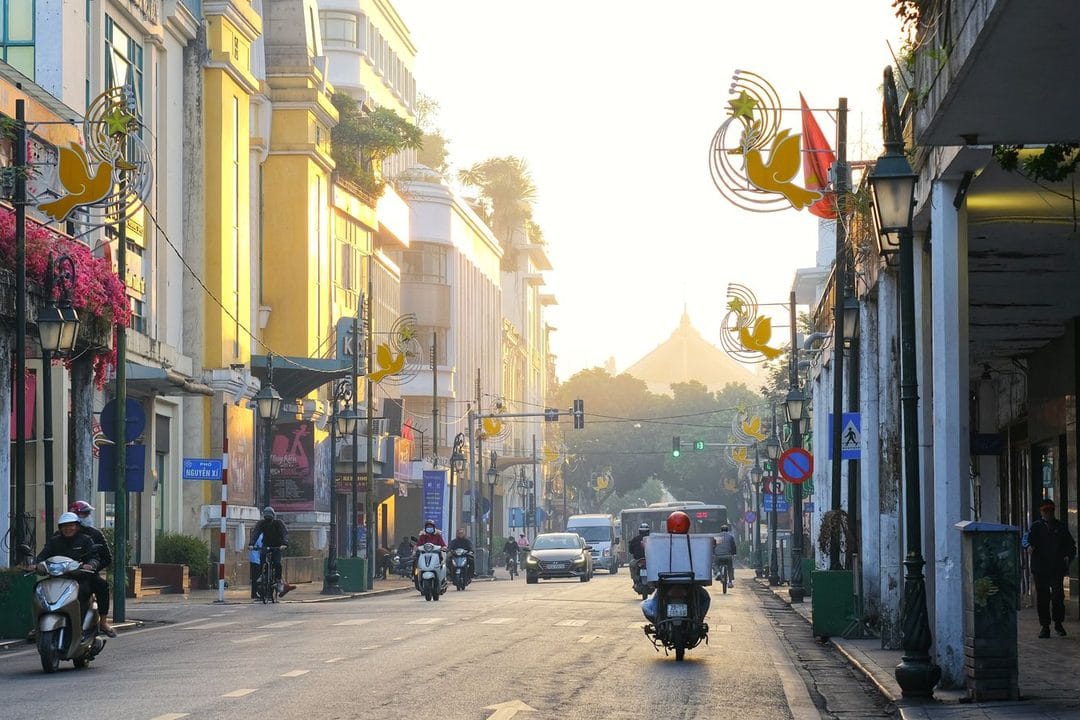
The queue at the Department of Land Transport office in Chaeng Wattana starts moving before eight in the morning, and by the time the doors open there are already forty people holding the same folder of documents: passport, visa page, a letter from the embassy or a rental contract, a medical certificate bought twenty minutes earlier from the clinic next door for 300 baht. Somewhere in that line is usually a first-year expat who assumed an international driving permit would cover them indefinitely. It won't. Most Southeast Asian countries treat the IDP as a short-term bridge — often 90 days to a year — and after that, driving on a foreign licence stops being a grey area and starts being a fine, or worse, an insurance claim that gets denied after a crash.
Converting a home licence into a local one is one of those admin tasks nobody warns you about during the apartment-hunting, school-shortlisting, bank-account-opening rush of the first month. It should be near the top of the list, not the bottom, because the rules genuinely differ enough between Thailand, Vietnam, Malaysia and Singapore that assuming one country's process elsewhere will cost you a wasted trip.
Thailand: the reciprocal list decides everything
Thailand's Department of Land Transport (DLT) runs a reciprocal agreement list — nationals from roughly seventy countries, including the UK, US, Germany, Australia and most EU states, can convert a valid home licence into a Thai one without sitting a driving test. What they can't skip is the paperwork: a medical certificate (any general clinic issues these same-day for 200–300 THB), a certified translation of the home licence if it isn't in English, proof of residence such as a rental agreement or a letter from immigration, and a colour vision and reaction test administered on-site at the DLT office itself. The whole process, done in person at Chaeng Wattana or a provincial DLT office, typically costs under 1,000 THB (around $28) and produces a licence valid for one to five years depending on the visa type backing the application.
Vietnam: the conversion nobody explains well
Vietnam's system runs through the Directorate for Roads of Vietnam (VNTA), and it surprises a lot of new arrivals because the country does maintain bilateral recognition agreements — but the practical reality on the ground rarely matches what a Facebook expat group insists is true. Applicants submit a notarised translation of their home licence, a copy of their temporary residence card, passport photos, and a health certificate from an approved Vietnamese hospital, not just any clinic. Processing runs through the VNTA portal or in person in Hanoi or Ho Chi Minh City, and the licence itself, once issued, is valid for the duration of the applicant's residence permit. Expect the whole thing, translation and hospital check included, to run somewhere in the 800,000–1,500,000 VND range depending on which agency handles the paperwork for you.
Malaysia and Singapore: where the test becomes unavoidable
This is where the story changes. Malaysia's Road Transport Department (JPJ) only waives the practical test for a short list of countries with formal reciprocity — the UK, several EU states, Australia, New Zealand, South Korea and Japan among them. Everyone else sits both a written test and a road test, the same as a first-time local applicant, which can take weeks to schedule depending on the branch. Singapore is stricter again: the reciprocal list at the Traffic Police is narrower, and even qualifying nationals typically need to have held their home licence for at least two years before conversion is granted. Miss that threshold and the only route is enrolling at a driving school and sitting the full local test — Basic Theory, Final Theory, and the practical circuit test — a process that realistically takes two to four months and costs upward of SGD 1,500 once lessons are factored in.
Here's the part that catches people out: holding a valid international driving permit does not mean you're covered by local car insurance once the IDP's validity window closes, even if the police haven't stopped you yet. An expat in Kuala Lumpur who wrote off a rented Perodua after eight months on an expired IDP found the insurer refused the claim outright, citing an unlicensed driver at the time of the accident. That's not a rare edge case — it's the standard clause in most Southeast Asian motor policies, and it's worth reading before assuming a foreign licence is "close enough."
What to actually bring
Every country's list looks similar on paper but the details matter enough to trip people up:
- Original passport plus a photocopy of the photo and visa pages
- Valid visa or residence permit — a tourist visa disqualifies most applications outright
- Home country driving licence, both original and a certified or notarised translation where the destination country doesn't accept English
- A medical or health certificate, though the accepted providers vary — Thailand accepts almost any clinic, Vietnam requires an approved hospital
- Passport-sized photos, usually two to four, and the local requirements on background colour are stricter than most people expect
- Proof of address, which can be a rental contract, a utility bill, or in some cases a letter from your employer or embassy
Bring more copies than the checklist says. Government offices across the region run out of the specific photocopier paper size they need with startling regularity, and the shop next door charging 5 THB or 5,000 VND per page will save you a second trip more often than seems reasonable.
Timing it around your visa, not the other way around
Convert the licence early in whatever residence permit cycle you're on, because most offices tie the driving licence's validity to the visa's expiry date rather than issuing a standard multi-year document. Renew the visa a week before a driving licence conversion appointment and the DLT or JPJ clerk may reject the file on the grounds that the supporting documents don't match current status — a mismatch that's entirely avoidable with a bit of sequencing. Book the driving test or conversion appointment for the week after a visa renewal clears, not the week before.
Motorbike licences deserve a separate mention, because in Vietnam and Thailand they're treated as an entirely different category from car licences, with their own tests, their own medical requirements, and — in Vietnam's case — an engine-capacity tier system (A1 for under 175cc, A2 for above) that catches out anyone who assumes a car conversion automatically covers a scooter.
When it's worth paying an agent
A cottage industry of relocation agents and "concierge" services has grown up around exactly this kind of admin, charging anywhere from $40 to $150 to walk applications through translation, appointment booking and document verification. For Singapore's stricter reciprocal-list requirements or Vietnam's hospital-certificate system, that fee buys real time savings — agents know which hospitals process the certificate same-day and which take a week. For Thailand's more straightforward reciprocal conversion, doing it solo at Chaeng Wattana is genuinely the better option; the process is well-documented, the staff deal with foreign applicants constantly, and paying someone else $80 to hand over a folder you could hand over yourself isn't worth it.
The license itself, once issued, opens up a version of the country that ride-hailing apps and taxi queues never quite reach — weekend drives to Kanchanaburi, a scooter loop around Phu Quoc, the ability to rent a car for a Malaysian coastal trip without the daily rental agency markup for "international licence risk" that some smaller operators still quietly apply. It's a small stack of paperwork standing between renting your mobility by the day and actually owning it for the length of your stay.