The Investment Pitch vs. the Legal Reality
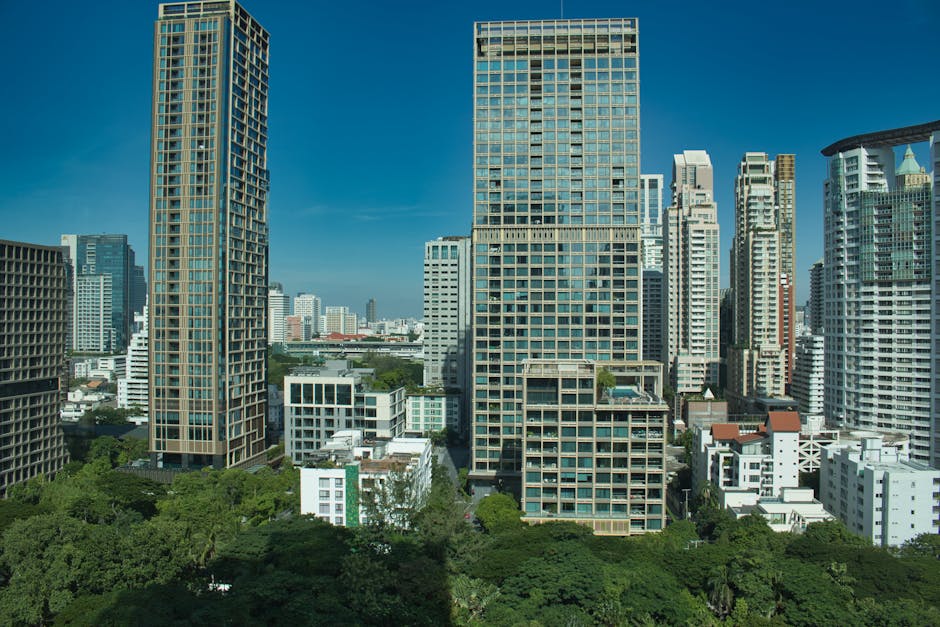
At every expat social event in Bangkok, someone is either excitedly describing the condo they just bought, nervously wondering if the condo they just bought was a mistake, or aggressively trying to sell you one. The Asian property market has a magnetic pull on expats who see low prices (relative to London, New York, or Sydney), growing economies, and what appears to be obvious appreciation potential. The property agents — who earn 3–5% commission on every sale — fuel this enthusiasm with projections of 8–10% annual returns and stories of people who bought in 2015 and doubled their money. What they don't mention is that foreign ownership in most Asian countries is legally restricted, property markets are less transparent than Western equivalents, and the practical challenges of owning real estate in a country where you're on a visa that could change are significant and underexplored.
Can Foreigners Buy? Country by Country
Thailand
Foreigners cannot own land in Thailand. Full stop. You can own a condominium unit in a building where foreign ownership doesn't exceed 49% of total units (Thai law mandates majority Thai ownership of every condo building). You cannot own a house, a villa, or a plot of land. Workarounds exist — leasehold agreements (30-year terms, sometimes renewable), purchasing through a Thai company, or having a Thai spouse purchase in their name — but each carries legal risks that honest lawyers will describe in terms that should make you cautious.
Condo purchases in qualifying buildings are straightforward and legal. Prices in Bangkok range from ฿2,000,000–5,000,000 ($56,000–$140,000) for a studio or one-bedroom in areas like On Nut, Bearing, or Bang Na, to ฿8,000,000–20,000,000 ($224,000–$560,000) in premium locations like Sukhumvit, Sathorn, or Thonglor. Transfer fees (2%), stamp duty (0.5%), and withholding tax (1%) add approximately 3.5% to the purchase price. Funds must be transferred from abroad in foreign currency through a Thai bank, which issues a Foreign Exchange Transaction Form (FETF) required for proving foreign ownership.
Japan
Japan is one of the most open Asian markets for foreign property ownership. Foreigners can buy land, houses, apartments, and commercial buildings with no restrictions and no requirement for residency. The process is straightforward: find a property, make an offer through an agent, sign a purchase contract, pay, and register ownership at the Legal Affairs Bureau. Mortgage financing is available to foreign residents with work visas and stable employment, though terms are stricter than for Japanese nationals (higher interest rates of 1.5–3% versus 0.5–1% for Japanese borrowers, larger down payments of 20–30%).
Tokyo property prices have increased steadily since 2013, with average apartment prices in central wards reaching ¥1,000,000–1,500,000 ($6,700–$10,000) per square meter. A 50-square-meter apartment in Shinjuku or Shibuya costs ¥50,000,000–75,000,000 ($333,000–$500,000). Older apartments (20+ years) in outer wards like Nerima or Edogawa can be found for ¥20,000,000–35,000,000 ($133,000–$233,000). Japan's declining population creates a counterargument to the investment case — outside Tokyo, Osaka, and a few other major cities, property values are stagnant or declining, and rural Japan has millions of essentially worthless houses.
Singapore
Foreigners can buy private condominiums and apartments in Singapore without restriction, but cannot buy HDB flats (public housing, which represents 80% of the market) or landed property (except on Sentosa Island). The biggest barrier is price: Singapore is one of the world's most expensive property markets. A one-bedroom condo in the central region costs S$1,000,000–1,800,000 ($740,000–$1,330,000). Additionally, foreigners pay an Additional Buyer's Stamp Duty (ABSD) of 60% on top of the purchase price — yes, 60%. This effectively prices out all but the wealthiest foreign buyers and makes Singapore property investment economically irrational for most expats.
South Korea, Vietnam, Indonesia
South Korea allows foreign purchase of apartments and condos with no restriction, though the process involves additional documentation and reporting requirements. Prices in Seoul are high — ₩500,000,000–1,000,000,000 ($370,000–$740,000) for a standard apartment in desirable areas. Vietnam allows foreigners to buy apartments (leasehold, 50-year terms, renewable) in approved developments, with foreign ownership capped at 30% per building. Prices in HCMC range from $100,000–$300,000 for mid-range apartments. Indonesia prohibits foreign land ownership; the "right to use" (hak pakai) system provides 30-year renewable terms for approved property types, and Bali villa "purchases" are actually long-term leases through local nominees — legally precarious arrangements that have generated extensive litigation.
The Financial Analysis Most People Skip
Before buying property in Asia, run this comparison: calculate the total annual cost of ownership (mortgage payments, property tax, maintenance fees, insurance, management fees if renting the unit out, vacancy periods, and eventual selling costs) versus the annual cost of renting an equivalent property. In most Asian cities, renting is cheaper than owning when all costs are included. Bangkok condo rental yields average 4–5% annually, which sounds decent until you subtract management fees (typically 30–40% of gross rent for a property managed while you're not in-country), vacancy periods (averaging 2 months per year), and capital gains tax on eventual sale (15–35% depending on holding period). Net yield drops to 1.5–3%, which barely beats inflation.
The exception is Japan, where rental yields in Tokyo average 3.5–5% net, property management is professional and affordable (5–10% of gross rent), vacancy rates are low in desirable areas, and the legal framework for landlords is well-established. Japanese property also doesn't carry the legal complexities of Thai or Indonesian ownership. If you're going to buy anywhere in Asia as a foreigner, Japan is the market that makes the most financial sense for most people.
When Buying Makes Sense
Buy if: you're committed to staying in the country for 7+ years (shorter timeframes rarely recoup transaction costs), you've researched the legal framework thoroughly with independent legal counsel (not the developer's recommended lawyer), the property generates positive cash flow after all expenses (not just during the years you're living in it), and you have a clear exit strategy. Buy for lifestyle if the apartment you want to live in is available at a price that makes monthly ownership cost comparable to rent — in some Bangkok locations and many Tokyo neighborhoods, the math works.
Rent if: you're staying less than five years, you value flexibility to move between cities or countries, you don't want to deal with property management from abroad, or the ownership restrictions in your chosen country create legal risks you're not comfortable with. Renting in Asia is not "throwing money away" — it's purchasing flexibility, legal simplicity, and freedom from the maintenance responsibilities and exit complications that foreign property ownership creates. For most expats, most of the time, renting is the smarter financial decision. The real estate agents will disagree. The math won't.