The Good News: Violent Crime Is Rare
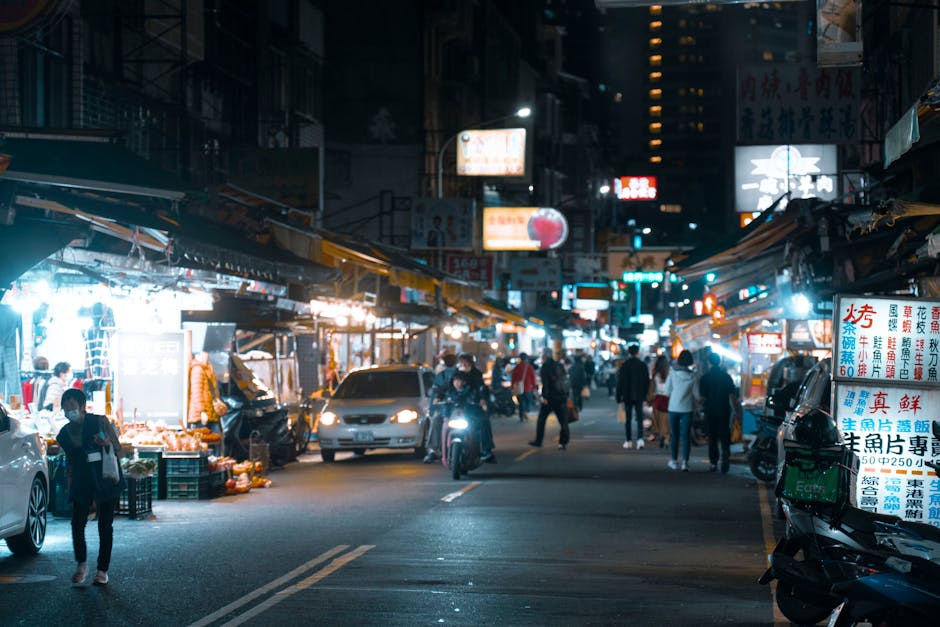
Let's start with the fact that terrifies your parents but should comfort you: major Asian cities are significantly safer than their Western counterparts by virtually every violent crime metric. Tokyo's murder rate is 0.3 per 100,000 — roughly one-twentieth of New York City's. Singapore hasn't had an unsolved murder in decades. Seoul, Taipei, Hong Kong, and Kuala Lumpur all have violent crime rates that would make most American and European cities deeply envious. The chance of being mugged, assaulted, or caught in a violent incident as an expat in any major Asian city is genuinely low.
This doesn't mean you should abandon common sense. It means your threat model is different from what you're used to. The risks in Asia are predominantly petty theft, scams, traffic accidents, natural disasters, and the occasional bureaucratic nightmare that feels threatening even when it's not physically dangerous. Adjusting your safety awareness to match the actual risk profile — rather than importing anxiety patterns from cities with completely different crime dynamics — is the first step to feeling genuinely secure.
Petty Theft: Patterns Worth Knowing
Phone snatching from motorbikes is the most common street crime affecting expats in Southeast Asia. The technique is simple: two people on a motorbike pull alongside you, the passenger grabs your phone from your hand or your bag, and they disappear into traffic before you've processed what happened. This is epidemic in Ho Chi Minh City, common in Jakarta and Phnom Penh, occasional in Bangkok, and essentially nonexistent in Tokyo, Seoul, and Singapore.
The prevention is equally simple: don't use your phone while walking on streets with motorbike traffic. If you need directions, step into a shop or doorway with your back to the wall. Use a crossbody bag with the bag portion in front of your body, not behind. Don't carry your phone in a back pocket. In high-risk cities, consider a phone lanyard that loops around your wrist — even if the thief grabs the phone, the lanyard gives you a fraction of a second to react and makes the grab awkward enough that many thieves skip the attempt.
Pickpocketing Hotspots
Tourist markets, crowded transit systems, and nightlife districts are where pickpockets operate across Asia. Bangkok's Chatuchak Weekend Market, Manila's Divisoria, and Jakarta's Tanah Abang are notorious. The techniques are universal: a distraction (bumping into you, asking a question, spilling something on your clothes) while a partner accesses your bag or pocket. In crowded BTS or MRT cars during rush hour in Bangkok, keep your bag in front of you and your hands on the zippers.
The counterintuitive safe cities deserve mention. In Tokyo, people routinely leave laptops on café tables to reserve seats while ordering at the counter. In Taipei, lost wallets returned to police stations with cash intact is normal rather than remarkable. Singapore convenience stores don't have anti-theft measures because shoplifting is negligible. In these cities, your biggest "theft" risk is leaving something in a taxi — and even then, calling the taxi company often results in the item being returned.
Scams: The Real Threat to Your Wallet
Scams separate more expats from their money than theft does, and they operate on a spectrum from mildly annoying to financially devastating. The common ones are well-documented but persist because new arrivals haven't learned them yet.
The Taxi Overcharge
Taxis without meters or with "broken" meters are the most universal scam in Southeast Asia. Bangkok tuk-tuks that offer a flat rate of 400 baht for a ride that should cost 80 baht by meter. Jakarta taxis from unofficial companies with rigged meters. Manila taxis that take circuitous routes. The solution: use Grab (the dominant ride-hailing app across Southeast Asia) for almost every ride. The fare is set before the trip starts, the route is tracked by GPS, and the driver has a rating to protect. When you must take a street taxi, insist on the meter before entering. If the driver refuses, walk away — another taxi is always 30 seconds behind.
The Gem Scam (Bangkok Special)
A friendly local approaches you near the Grand Palace and mentions that the temple is closed today for a "special ceremony." They suggest visiting a nearby gem shop instead, where you'll find incredible deals on sapphires that you can resell at home for triple the price. The gems are worthless glass. This scam has operated for over 30 years and still catches people because the initial approach is genuinely friendly and the story is plausible. Rule: if a stranger steers you toward a specific shop, the stranger is employed by the shop.
The Rental Scam
This one hits harder. Fake landlords listing apartments they don't own on expat Facebook groups, collecting deposits via bank transfer, then disappearing. This is common in Bangkok, Ho Chi Minh City, and Manila. Never transfer money without visiting the apartment in person, verifying the landlord's identity against the property deed, and getting a signed lease. Use reputable agents with physical offices, even though their fees (typically one month's rent) feel expensive. That fee buys you verification that the apartment exists, the landlord owns it, and the lease is enforceable.
Traffic: The Actual Biggest Danger
The leading cause of injury and death for expats in Asia isn't crime, disease, or natural disaster. It's traffic. Southeast Asian road fatality rates are among the highest in the world: Thailand has 32 deaths per 100,000 population annually (the US rate is 12.7), Vietnam has 26, and the Philippines has 12. Motorbikes account for the majority of these deaths.
If you ride a motorbike in Southeast Asia — and many expats do because it's the cheapest and most efficient transportation — wear a real helmet. Not the plastic bowls that rental shops hand you, which protect nothing. A proper full-face or three-quarter helmet from a brand like HJC or LS2 costs $60-120 and is the single most important safety investment you'll make. Wear it every ride, even for a two-minute trip to the corner store. The data is unambiguous: helmeted riders are 37 percent less likely to die in a crash and 69 percent less likely to suffer traumatic brain injury.
Pedestrian Safety
Crossing the street in Hanoi or Ho Chi Minh City is legendary among travel stories, and it genuinely requires a technique that contradicts every pedestrian instinct you have. You walk at a steady, predictable pace, and the motorbike traffic flows around you. The worst thing you can do is stop, start, or dart — unpredictability causes accidents. In practice, you walk with the locals, match their pace, and trust the system. It works. The first week is terrifying. The second week is normal. By the third week, crossing a street in your home country feels eerily quiet.
In cities with better traffic infrastructure — Tokyo, Seoul, Singapore, Taipei — follow pedestrian signals religiously. Jaywalking in Singapore carries a fine of up to SGD 1,000 ($740), and the cameras are everywhere. In Tokyo, jaywalking is legal but socially unacceptable, and you'll receive disapproving looks from elderly women that carry more moral weight than any traffic fine.
Natural Disasters: Know Your City's Risks
Asia sits on the Ring of Fire, experiences annual typhoon seasons, and has monsoon flooding that can turn streets into rivers in under an hour. Your disaster preparedness should match your specific city's risk profile.
Earthquakes (Japan, Taiwan, Philippines, Indonesia)
Japan's building codes are the world's strictest — a magnitude 6.0 earthquake in a modern Tokyo apartment building is unsettling but rarely dangerous. Taiwan's codes are similarly rigorous. The Philippines and Indonesia have newer construction that may not meet the same standards, especially in smaller cities and rural areas. In any earthquake-prone city: secure heavy furniture to walls, keep shoes and a flashlight beside your bed, know the location of your building's emergency exits, and have a 72-hour emergency bag with water, food, medications, copies of your passport, and cash. Japan's earthquake early warning system sends alerts to all phones — don't silence them.
Typhoons (Philippines, Japan, Taiwan, Vietnam, Hong Kong)
Typhoon season runs roughly from June through November. The Philippines gets hit hardest, with 20+ typhoons per year, but Japan, Taiwan, and Vietnam receive several each season. Hong Kong's Signal 8 typhoon warning shuts down the entire city — offices close, public transport stops, and everyone stays home. Take it seriously: stock food and water for three days, charge all devices, and don't go outside to film dramatic footage for social media. Every year, tourists and overconfident expats get injured doing exactly that.
Flooding (Bangkok, Jakarta, Manila, Ho Chi Minh City)
Bangkok floods annually during heavy monsoon rains, and some neighborhoods become impassable for days. When apartment hunting, ask locals about the specific street's flooding history — some blocks flood reliably while the next block stays dry. Ground-floor apartments in flood-prone areas are significantly cheaper for a reason. Choose upper floors. Keep important documents in waterproof bags. If you own a vehicle, know where the elevated parking areas are before the rains start.
Health Emergencies
International insurance is not optional. Companies like Cigna Global, Allianz Care, and Pacific Cross offer plans ranging from $1,200 to $4,000 per year depending on coverage level and deductible. Choose a plan that covers emergency evacuation — a medical flight from a rural area in Indonesia or the Philippines to a properly equipped hospital in Singapore or Bangkok can cost $50,000-$100,000 without insurance.
Save your embassy's emergency number in your phone. The US Embassy in Bangkok operates a 24/7 line for American citizens. The UK, Australian, and Canadian embassies maintain similar services across Asia. These aren't just for dramatic emergencies — they can help navigate hospital billing disputes, replace stolen passports, and provide local legal referrals.
The Digital Safety Layer
Use a VPN in every Asian country, not just China. Public WiFi networks in cafés, airports, and hotels across the region are poorly secured and occasionally compromised. A reputable VPN costs $5-10/month and encrypts your traffic regardless of the network. Use two-factor authentication on every account, preferably with an authenticator app rather than SMS (SIM-swapping fraud exists in Southeast Asia). Keep a photocopy of your passport in your email, in your cloud storage, and in a physical folder in your apartment. If your passport is stolen, having copies reduces the replacement timeline from weeks to days.
Register with your home country's embassy or consular office. The US State Department's STEP program (Smart Traveler Enrollment Program) sends security alerts for your registered country and ensures the embassy can reach you during a crisis. Most Western countries offer similar registration systems. It takes five minutes and costs nothing.
The Bottom Line
Asia is overwhelmingly safe for expats who apply basic awareness. The threats that exist — petty theft, scams, traffic, natural disasters — are manageable with straightforward precautions that quickly become habits. The bigger risk is the complacency that comes from living in genuinely safe cities like Tokyo or Singapore for years and then visiting a city with a different risk profile without recalibrating your awareness. Stay situationally aware, keep your insurance current, and don't ride a motorbike without a real helmet. Beyond that, enjoy the remarkable safety that most Asian cities offer — it's one of the most underrated benefits of living in this part of the world.