The Comfortable Trap
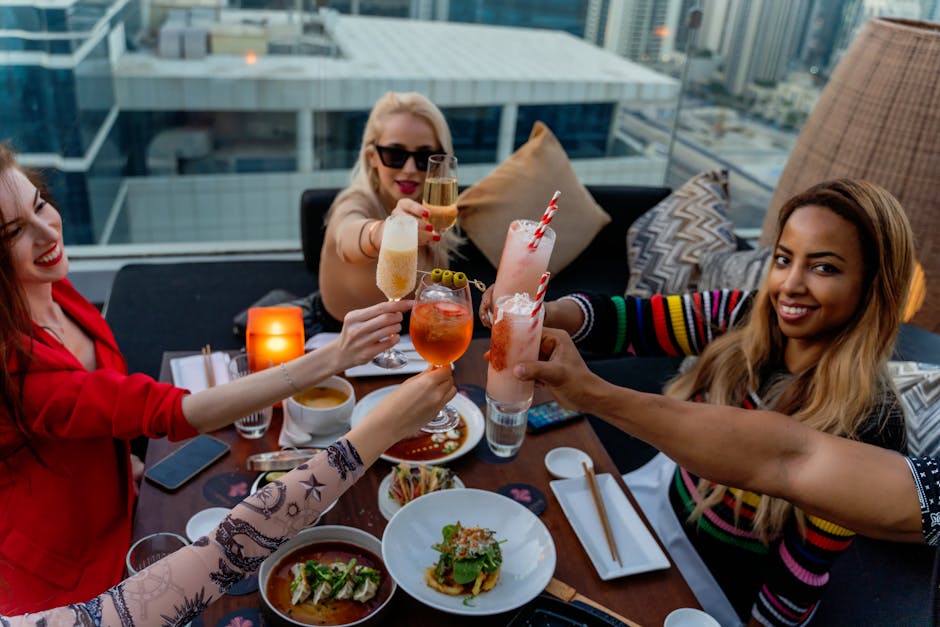
Fourteen months into my life in Bangkok, I realized that my entire social world consisted of other Americans and Brits. My morning coffee came from an Australian-owned cafe in Thonglor. My gym was dominated by Western expats. My Saturday routine was brunch at a Western restaurant followed by afternoon drinks at an expat bar. I ate Thai food, yes — but at restaurants recommended by other expats, in neighborhoods populated by other expats, seated at tables surrounded by other expats. I'd moved 8,000 miles to live essentially the same social life I'd had at home, except the weather was hotter and the beer was cheaper. The only Thai person I spoke to regularly was my building's receptionist, and our conversations maxed out at "Good morning, how are you?" "Fine, thank you."
The expat bubble is comfortable, obvious, and available in every Asian city with more than a thousand foreign residents. It forms naturally and quickly: you arrive knowing nobody, join Facebook groups for expats, attend meetups for newcomers, and within weeks you have a social circle of people who share your language, your cultural references, and your experience of being foreign in Asia. These friendships are genuine and valuable — nobody should apologize for seeking the comfort of shared experience during the disorientation of relocation. But if the bubble becomes your entire world, you've traded the challenge and reward of cross-cultural living for a simulacrum that happens to have better street food.
Why Bubbles Form
The expat bubble isn't a character flaw — it's a structural outcome of specific conditions. Language barriers make local friendships harder. Cultural differences in social norms (how friendships form, what constitutes appropriate casual interaction, the role of age and hierarchy in social dynamics) create friction that same-culture friendships don't have. Residential segregation concentrates expats in specific neighborhoods (Thonglor in Bangkok, Itaewon in Seoul, Roppongi in Tokyo) where the infrastructure — English-language menus, Western-style bars, foreigner-friendly services — reinforces separation from local life. And the transient nature of expat populations creates a social environment where everyone is simultaneously available for new friendships and likely to leave within 1–3 years, which favors quick connections over deep ones.
The professional bubble compounds the social one. Expats often work in multinational companies, international schools, or foreign-owned businesses where the working language is English and the colleagues are a mix of nationalities. If your workday is conducted in English with other foreigners and your social life mirrors it, you can live in Thailand for five years without learning to count past ten in Thai or forming a single meaningful relationship with a Thai person. This isn't unique to Asia — the same dynamic exists among American expats in Paris, British expats in Spain, and Japanese expats in New York. The shared language and cultural similarity of the bubble is simply more comfortable than the effort required to cross the cultural divide.
What You Miss
The cost of the bubble isn't immediately obvious, which is why it persists. You miss the actual culture of the country you live in — not the tourist version, but the lived reality of how people organize their families, celebrate their holidays, navigate their professional lives, and find meaning in their communities. You miss the cognitive and emotional growth that comes from genuinely understanding a perspective fundamentally different from your own. You miss the friendships that, while harder to build, offer a depth of cultural exchange that same-nationality friendships can't match. And you miss the practical benefits: local friends who know how the bureaucracy actually works, which neighborhoods are genuinely good (versus expat-approved), where to eat food that's actually Thai or Korean or Japanese rather than the version adapted for foreign palates.
The most limiting aspect of the bubble is that it prevents you from developing the cross-cultural competence that was supposedly the reason you moved abroad. Employers value "international experience" because it implies cultural adaptability, multilingual capability, and the ability to work across cultural boundaries. But if your "international experience" was three years in an English-speaking enclave in Asia, the actual cross-cultural competence is minimal. You lived abroad geographically. Culturally, you never left home.
How to Pop the Bubble (Without Abandoning It Entirely)
The goal isn't to reject the expat community entirely — that would be isolating and unnecessary. The goal is to expand beyond it so that your social life includes both the comfort of shared culture and the growth of cross-cultural connection. Here are specific, practical steps that worked for me and for other expats I know who successfully built integrated lives.
Learn the language. Even basic conversational ability in Thai, Japanese, Korean, or Vietnamese transforms your daily interactions and signals to locals that you're interested in their culture rather than merely residing in their country. Enroll in classes, hire a tutor, use language exchange apps — the method matters less than the consistency. Language ability is the single strongest predictor of whether an expat develops meaningful local friendships or remains in the bubble.
Live outside the expat neighborhoods. Moving from Thonglor to Ari in Bangkok, from Itaewon to Mapo in Seoul, or from Roppongi to Koenji in Tokyo puts you in neighborhoods where your neighbors are locals, the restaurants serve actual local food at local prices, and the social infrastructure isn't designed to cater to foreigners. You'll miss the convenience of English-language everything. You'll gain the immersion that makes living abroad actually feel like living abroad.
Join activities where you're the only foreigner. Community sports leagues, local volunteer organizations, neighborhood associations, religious communities if applicable, hobby groups that operate in the local language. Being the only foreigner in a group is uncomfortable initially and incredibly rewarding once you push through the awkwardness. You'll learn faster, develop relationships with people who don't have expat-filtered perspectives, and gain a genuine understanding of local social dynamics.
Accept the discomfort. Cross-cultural friendships are harder to build, harder to maintain, and more prone to misunderstandings than same-culture friendships. You'll say the wrong thing. You'll miss cultural cues. You'll feel stupid and frustrated and lonely in moments when your expat friends would understand you instantly. This discomfort is the price of growth, and it's worth paying — not because suffering is virtuous, but because the friendships and understanding that emerge from it are richer than what the bubble can provide. The bubble gives you comfort. The world outside it gives you the experience you actually came here for.